

Thyroid Dosing Schedule Checker
Are you worried your morning coffee or vitamins are blocking your medication? This tool analyzes your routine against established medical guidelines.
Enter your details
We will calculate if your body has enough time to absorb the medication before food blocks it.
- Empty Stomach: Recommended at least 30-60 minutes before eating.
- Coffee/Caffeine: Can decrease absorption by ~36%. Wait 60 mins.
- Minerals: Calcium & Iron require a full 4-hour separation.
Have you ever felt tired despite taking your thyroid medication faithfully? You're not alone. Many people struggle with fluctuating energy levels even when they think they are doing everything right. Often, the problem isn't the dosage, but rather when and how you take it. Your body needs a clear path to absorb these hormones, and obstacles like breakfast, supplements, or stress can quietly block that path.
Levothyroxine is the synthetic form of thyroxine (T4) used to treat hypothyroidism, replacing the missing hormone your thyroid gland should produce. Despite being around since the 1950s, it remains tricky to handle. Research shows that absorption relies heavily on an empty stomach and specific acid conditions in your gut. If you skip the wait time before eating, or grab a coffee too soon, you might miss out on a significant chunk of your dose.
The Science Behind Thyroid Absorption
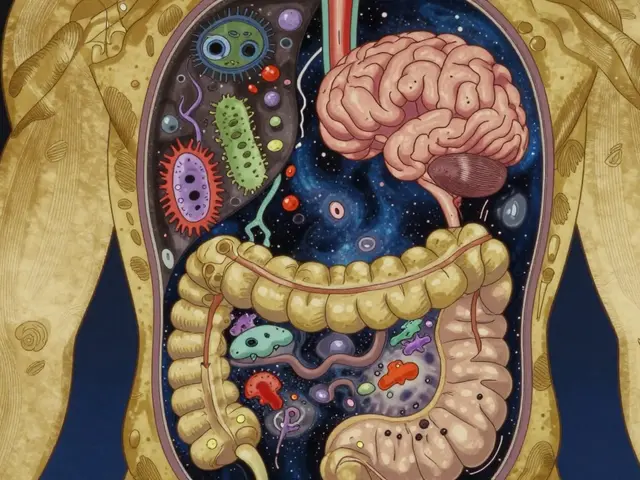
To fix the problem, you have to understand the mechanics. When you swallow your pill, it travels down to your small intestine. This is where the magic happens. For TSH (Thyroid-Stimulating Hormone), the primary marker doctors use to monitor thyroid function in blood tests levels to stay stable, your body needs to absorb enough T4 consistently. Studies indicate that food intake can reduce absorption significantly. One major study found that taking medication with breakfast resulted in TSH levels nearly three times higher compared to taking it on an empty stomach. That is a huge difference that translates directly to your symptoms.
This sensitivity is why timing matters so much. Your stomach acid plays a role, but the real action is in the intestines. If other compounds-like minerals or fiber-are floating in your digestive tract at the same time, they can bind to the medication. Imagine trying to walk through a crowded hallway; if there is debris on the floor, you trip and lose momentum. Similarly, calcium or iron in your system can "trip up" the absorption process, leaving the hormone sitting in your gut to be excreted rather than used by your body.
Morning Routine vs. Evening Protocol
Most people default to morning dosing. It feels natural to take a pill when you wake up, but life gets busy. Rushing, grabbing a cup of coffee immediately, or forgetting to wait the recommended 30-60 minutes creates inconsistencies. While morning dosing is the standard recommendation from organizations like the American Thyroid Association, research suggests it isn't the only way.
Some patients find success with evening dosing. A study published in the Journal of Clinical Endocrinology & Metabolism showed that for some groups, switching to bedtime could stabilize TSH levels better. This works well if you finish dinner at least four hours before lying down. It bypasses the morning rush and reduces the risk of eating too soon after swallowing the pill. However, this approach requires discipline regarding late-night snacks. If you tend to graze before bed, evening dosing might backfire. The key takeaway is consistency, whether you do it at sunrise or sunset.
The Hidden Saboteurs: What Blocks Absorption?
Knowing to take it on an empty stomach is step one. Step two is knowing what counts as "full." We aren't just talking about solid meals; certain beverages and pills matter just as much.
| Substance | Impact on Absorption | Recommended Waiting Time |
|---|---|---|
| Coffee | Decreases by ~36% | At least 60 minutes after med |
| Calcium Supplements | Reduces by 27-36% | Separate by 4 hours |
| Iron Supplements | Reduces by 39% | Separate by 4 hours |
| Fiber Supplements | Significant Binding | Separate by 4 hours |
| Soy Products | Absorption Interference | Avoid or space widely |
Notice coffee makes the list? Caffeine isn't just stimulating; it changes how your body processes the medication. Even if you drink black coffee, waiting at least an hour after your pill is crucial. Mineral supplements are another trap. Many women over age 60 take calcium for bone health, often without realizing how much it disrupts their thyroid therapy. You have to schedule these separate slots in your day. Taking your calcium with lunch instead of breakfast helps solve this puzzle.

Navigating Multiple Medications
If you are managing other health conditions, things get complex. Proton pump inhibitors (PPIs) like omeprazole or lansoprazole are common for heartburn, but they alter stomach acidity. Less acid means less solubility for your thyroid pill. Doctors often advise spacing these out by several hours. The same logic applies to multivitamins. Because they often contain trace amounts of minerals, they are treated as potential blockers.
This isn't just theoretical. Patient data from GoodRx reviews highlights that users who accidentally took their medication with coffee for weeks saw their TSH jump dramatically, bringing back fatigue instantly. Symptoms returned as quickly as the interference did. This feedback loop proves that consistency prevents these crashes.
Special Considerations for Pregnant Women
Pregnancy brings extra stakes. Thyroid hormone is critical for fetal brain development during the first trimester. Guidelines suggest strict adherence to the pre-breakfast protocol during pregnancy. TSH targets are tighter, often below 2.5 mIU/L early in pregnancy. A missed window of absorption here can impact the baby. If you are pregnant, relying on the safest route-early morning fasting-is the standard advice from endocrinologists.
For those with thyroid cancer receiving suppressive therapy, the margin for error shrinks even further. Keeping TSH very low is necessary to prevent recurrence, so any variation in absorption becomes a serious concern. These patients benefit from highly standardized routines, avoiding variables whenever possible.

Practical Strategies for Success
Willpower rarely wins. Habits win. Place your medication bottle next to your toothbrush or your car keys. Visual cues trigger action. If you rely on a reminder app, use it. Data shows that smartphone alerts improved adherence significantly compared to pillboxes alone.
Consider your environment. Some newer formulations, like liquid solutions or delayed-release capsules, are entering the market. These versions aim to bypass the food interactions entirely. While traditional tablets still dominate prescriptions, asking your doctor about alternative formulations might save you from a stressful morning routine if lifestyle adjustments fail.
Monitoring is essential. When changing your schedule, expect your TSH to shift. Blood tests every 6-8 weeks help track the adjustment until levels settle. Don't assume you are fine just because you feel okay. Blood work provides the objective truth about absorption efficiency.
When Routines Break Down
We all forget sometimes. If you remember an hour later, don't panic and double up. Skip that dose and wait for the next scheduled time. Overdosing risks heart palpitations and anxiety, while consistent underdosing leads to hypothyroid symptoms. Inconsistent timing is the real enemy. Erratic schedules confuse your body's hormonal regulation systems.
Frequently Asked Questions
Can I take levothyroxine with coffee?
It is generally not recommended to take levothyroxine with coffee. Research suggests coffee can decrease absorption by approximately 36%. You should wait at least 60 minutes after taking your medication before drinking coffee to ensure proper effectiveness.
How long should I wait before eating breakfast?
Guidelines recommend waiting 30 to 60 minutes before consuming any food or caloric drinks. This allows the medication to pass through the stomach and reach the upper small intestine, where absorption primarily occurs.
Is evening dosing better than morning dosing?
Evidence is mixed. While some studies show evening dosing can lower TSH levels further, others show no significant difference. The most important factor is choosing a time you can maintain consistently every day on an empty stomach.
Do calcium supplements affect my thyroid medication?
Yes, calcium binds to levothyroxine and can reduce absorption by 27-36%. You should separate calcium supplementation from your thyroid medication by at least 4 hours to avoid this interaction.
What if I forget to take my pill?
If you realize you missed your dose the same day, take it as soon as you remember. If you do not remember until the next day, skip the missed dose and resume your normal schedule. Do not double the dose to make up for the missed one.








Cullen Zelenka
31 Mar, 2026
I truly believe finding the right routine makes all the difference in how we feel every single day. Consistency is definitely the hardest part but once you lock it in things stabilize nicely. We all struggle with the morning rush but setting alarms helps keep us on track.
Cara Duncan
2 Apr, 2026
It really surprised me when i found out coffee blocks the meds so much ☕️🚫🤦♀️ I had no idea about the percentage loss either 📉💔
Rocky Pabillore
3 Apr, 2026
People usually ignore these basic facts because they prefer convenience over health results. Most simply do not have the discipline to separate supplements by four hours consistently throughout the week.
Eleanor Black
4 Apr, 2026
It is often quite fascinating to observe how human physiology reacts to such subtle changes in administration protocols regarding pharmaceutical compounds.
We tend to overlook the significance of gastric pH levels when considering drug solubility factors in the small intestine.
Many patients believe that taking their medication at any arbitrary hour suffices for therapeutic efficacy which is demonstrably incorrect based on clinical literature.
The interaction between calcium ions and levothyroxine molecules creates an insoluble complex that renders the hormone unavailable for systemic circulation.
Iron supplements behave similarly by binding to the thyronine structure before absorption occurs through the enterocytes.
Dietary fiber acts as a sponge that traps the medication within the fecal mass rather than allowing passive diffusion.
Coffee consumption introduces caffeine which accelerates gastric emptying rates too quickly for optimal uptake mechanisms to engage fully.
This rush prevents the necessary surface contact time required in the duodenum for significant transport across the epithelial layer.
Hormonal stability depends entirely upon consistent plasma concentrations which fluctuate wildly when these variables are not controlled rigorously.
Doctors emphasize waiting periods because biology does not tolerate shortcuts when dealing with endocrine regulation systems specifically.
Sleep cycles also influence metabolism so evening dosing requires strict dietary discipline after dinner hours pass completely.
If you graze throughout the night then the benefits disappear just like a child chasing bubbles in the wind unfortunately.
Standardizing your environment helps eliminate external noise that interferes with internal balance restoration efforts daily.
Medical adherence remains the cornerstone of managing chronic conditions successfully over decades without adverse outcomes appearing later.
Therefore patience with the schedule yields results that casual attempts never achieve even with high intelligence.
Callie Bartley
5 Apr, 2026
Honestly most doctors just want you to take whatever they prescribe instead of listening to actual patient experiences.
Rod Farren
5 Apr, 2026
Bioavailability metrics indicate significant reduction in serum T4 concentration when concomitant ingestion of calcium carbonate occurs within two hours of levothyroxine administration due to chelation effects.
James DeZego
7 Apr, 2026
Basically what that means is dont take your vitamins with your thyroid pill 🔐🧪 Space them out so your body can actually use the medicine 💊✨
Owen Barnes
8 Apr, 2026
I used to take my pills right with my coffe and felt tired all day now i wait 40 mins and feel normal again sometimes.
Russel Sarong
8 Apr, 2026
OMG!!! That is EXACTLY what happened to me too!!! You cannot underestimate the power of that coffee break!!!!!⚡️😱
Julian Soro
10 Apr, 2026
You got this! Building a habit takes time but sticking to the rule will make you feel way better soon. Keep going strong everyone!
Jenny Gardner
12 Apr, 2026
This information is absolutely vital! Everyone needs to know this! Please read it carefully! It is very important for your health! Thank you for sharing!
Sharon Munger
12 Apr, 2026
Just remember to track your times and see the change happen. Consistency wins.
Arun Kumar
12 Apr, 2026
In many places we eat dinner late so evening dose works great here. Just find what fits your life best.