
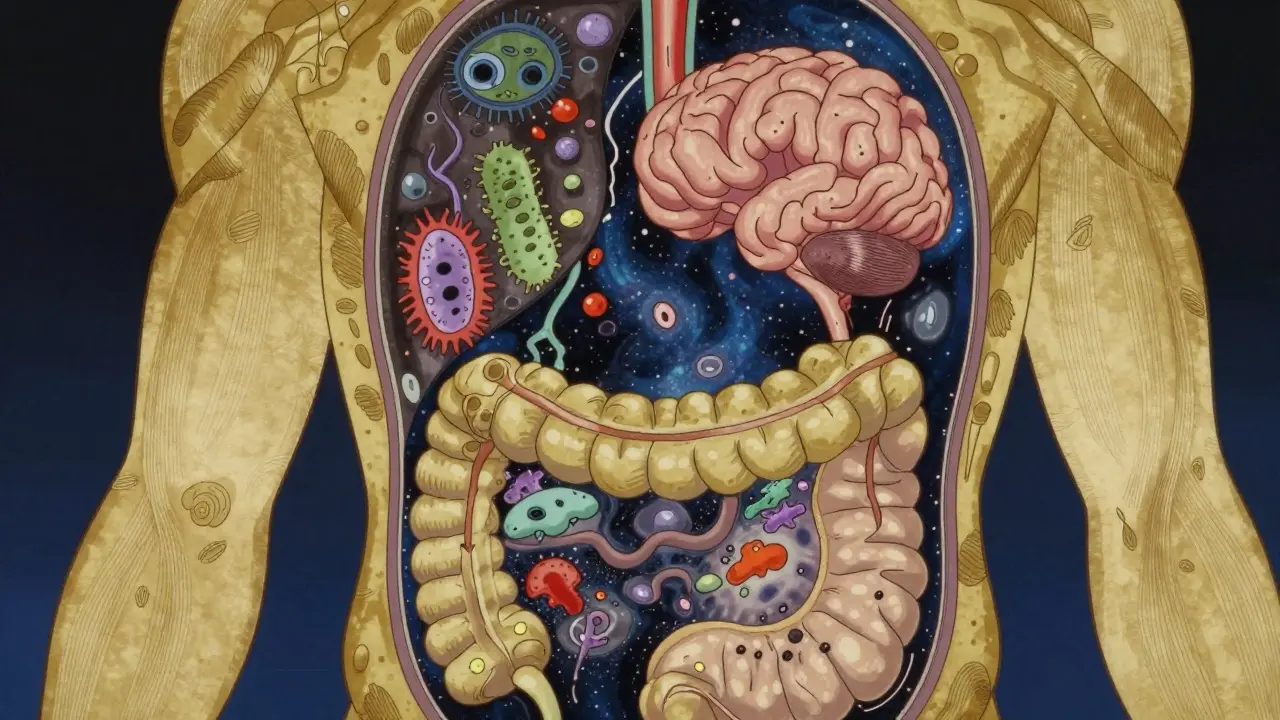
Imagine having a second brain in your belly. It's not literally a brain, but a massive colony of trillions of microorganisms-bacteria, viruses, and fungi-that collectively weigh up to 2 kilograms. This is your gut microbiota is the complex community of microorganisms living in the human gastrointestinal tract. For a long time, we thought these bugs were just along for the ride, helping us digest food. But recent science shows they might actually be calling the shots when it comes to how much you weigh and how your body handles sugar and fat.
If you've ever wondered why two people can eat the exact same diet and exercise routine, yet one stays lean while the other struggles with weight gain, the answer might lie in these microbes. It turns out that the "weight-loss" version of a gut is fundamentally different from the "weight-gain" version. The goal isn't just to lose pounds, but to fix the metabolic environment that makes weight gain so easy in the first place.
The Hidden Link Between Your Gut and Your Waistline
The connection between the gut and obesity isn't just a coincidence. Research has shown that people struggling with obesity often have a different microbial "signature" than lean individuals. One of the most discussed markers is the ratio between two major groups of bacteria: Firmicutes and Bacteroidetes. Think of these like two different teams in your gut; in many obese individuals, the Firmicutes team is way too large.
Why does this matter? Because these bacteria change how you harvest energy. Some gut profiles are simply better at squeezing every single calorie out of your food. In fact, some studies suggest that obese individuals can extract 2% to 10% more calories from the same amount of dietary fiber than lean people. Essentially, your gut might be over-performing, turning food into stored energy (fat) more efficiently than it should.
But it's not just about calories. A "leaky" gut-where the intestinal barrier becomes permeable-allows proinflammatory molecules like lipopolysaccharides (LPS) to slip into the bloodstream. This triggers a low-grade fire of systemic inflammation, which eventually leads to insulin resistance. When your cells stop responding to insulin, your metabolism slows down, and your body starts storing more fat.
Enter Probiotics: The Metabolic Helpers
This is where probiotics come in. These are live microorganisms that, when you eat them in the right amount, provide a health benefit. They aren't a magic pill that melts fat overnight, but they work by attempting to restore the balance of your gut flora and sealing those "leaks" in your gut barrier.
Different strains do different jobs. For example, Lactobacillus gasseri SBT2055 has shown some impressive results in reducing visceral fat-the dangerous fat that wraps around your organs. In one Japanese trial, participants saw a nearly 8% decrease in visceral fat after 12 weeks. Other strains like Bifidobacterium longum and Lactobacillus rhamnosus GG are frequently used to improve overall metabolic health.
To see a real effect, dose matters. Most successful interventions use between 109 and 1011 colony-forming units (CFU) daily. If you're looking at a supplement and the CFU count is tiny, it likely won't survive the trip to your colon to do any real work.
| Strain Name | Primary Targeted Benefit | Typical Evidence/Outcome |
|---|---|---|
| Lactobacillus gasseri SBT2055 | Visceral Fat Reduction | ~7.9% reduction in visceral fat over 12 weeks |
| Bifidobacterium longum | Insulin Sensitivity | Improved glucose metabolism and weight loss |
| Lactobacillus rhamnosus GG | Gut Barrier Integrity | Reduction in systemic inflammation (LPS) |
| Multi-strain Blends | General Metabolic Health | Broader improvements in lipids and BMI |

Synbiotics: The Power Couple of Weight Loss
If probiotics are the "seeds," prebiotics are the "fertilizer." Prebiotics are non-digestible fibers that feed the good bacteria already in your gut. When you combine the two in one supplement, you get what's called synbiotics.
The logic is simple: why just add new bacteria if you aren't giving them the food they need to survive? Research suggests synbiotics are significantly more effective than probiotics alone. In a meta-analysis of 15 clinical trials, synbiotic interventions resulted in 37% greater weight reduction. They help increase the production of short-chain fatty acids (SCFAs) like butyrate, which tell your brain you're full and help your muscles burn energy more efficiently.
By boosting the production of ketones and methyl acetates by 15-25%, synbiotics essentially "tune" your metabolism to be more active. It's like upgrading the software of your digestion to stop storing and start burning.
Does it Actually Work for Everyone?
Here is the honest truth: probiotics are not a one-size-fits-all solution. If you take a probiotic and see zero change in the scale, you aren't necessarily doing anything wrong. The effectiveness of these supplements varies wildly based on your baseline microbiome. In fact, about 38% of studied probiotic strains show no significant impact on weight at all.
Interestingly, ethnicity and geography play a role. Data indicates that these interventions are about 22% more effective in Asian populations than in Western populations. This is likely because the "starting point" of the gut microbiome differs across the globe. What works for someone in Tokyo might not work the same way for someone in New York or Adelaide.
There is also the issue of sustainability. Many people see a weight drop during a 12-week trial, but 60-80% of those benefits vanish within 8 to 12 weeks after they stop taking the supplement. This tells us that the gut is very resilient-it wants to go back to its original state. To keep the benefits, you usually have to maintain the habit or change your overall diet to support the new bacterial balance.

Practical Tips for Managing Your Metabolic Gut
You don't need a PhD in microbiology to start improving your metabolic health. If you want to use the gut-brain axis to help with weight management, focus on these three pillars:
- Prioritize Variety: Don't just stick to one yogurt brand. Rotate your probiotic sources (kefir, sauerkraut, kimchi, supplements) to introduce different strains.
- Feed the Good Guys: Probiotics won't survive without fiber. Eat plenty of garlic, onions, leeks, and asparagus-all of which act as high-quality prebiotics.
- Watch the Inflammation: Since systemic inflammation (caused by LPS) drives insulin resistance, pair your probiotics with Omega-3 fatty acids. Some studies show that combining high-dose probiotics with Omega-3s can reduce inflammatory markers like CRP by nearly 25%.
If you're choosing a supplement, look for "CFUs" in the billions and check if the strain is specifically linked to metabolic health (like L. gasseri) rather than just general digestion.
Can I lose weight just by taking probiotics?
Probiotics are a supportive tool, not a primary weight-loss method. While they can help reduce waist circumference (averaging about 2.56 cm in some meta-analyses) and improve metabolism, they work best when combined with a calorie-controlled diet and exercise. They essentially "prime" your body to respond better to weight loss efforts.
What is the best probiotic strain for belly fat?
Lactobacillus gasseri SBT2055 has shown the most specific evidence for reducing visceral (belly) fat, with some trials showing nearly an 8% reduction over 12 weeks. However, multi-strain formulations are often better for general metabolic health and insulin sensitivity.
How long does it take for probiotics to work?
Most clinical studies show measurable results around the 6 to 12-week mark. For example, significant weight reductions have been noted after 6 weeks in some smaller trials, but metabolic shifts usually require a few months of consistent use.
What is the difference between a probiotic and a synbiotic?
A probiotic is just the live beneficial bacteria. A synbiotic is a combination of those live bacteria (probiotics) and the non-digestible fibers (prebiotics) that feed them. Synbiotics are generally more effective because they ensure the bacteria have the nutrients they need to thrive in your gut.
Will the weight loss stay after I stop taking probiotics?
Unfortunately, the effect is often temporary. Data shows that 60-80% of the benefits can reverse within 8 to 12 weeks after stopping the supplement. To make the changes permanent, you need to maintain a diet rich in prebiotics to keep the beneficial bacteria populations stable.
What to Do Next
If you're just starting, don't jump into the most expensive multi-strain supplement immediately. Start by incorporating fermented foods into your daily routine-this is the most natural way to introduce variety to your microbiota. If you decide to go the supplement route, try one specific strain for at least 8 weeks to see how your body responds.
For those with metabolic syndrome or Type 2 Diabetes, it's vital to consult a doctor first. Because probiotics can influence insulin sensitivity and glucose levels, they can interact with medications. A personalized approach-potentially using microbiome profiling in the future-will be the gold standard for weight management through gut health.






Write a comment