
When you’re flying with prescriptions, carrying your necessary medications through airport security and across borders. Also known as traveling with medicine, it’s not just about packing your bottle—it’s about following rules that vary by country, airline, and even the type of drug you’re carrying. Many people assume if it’s legal at home, it’s fine on a plane. That’s not true. The TSA, the U.S. agency responsible for airport security allows prescription meds in carry-ons and checked bags, but they can and will ask for proof. A pill bottle with your name on it isn’t always enough. Some travelers get pulled aside because their meds don’t match their ID, or because they’re carrying something classified as a controlled substance.
Then there’s the issue of international prescription travel, bringing your meds into another country. Countries like Japan, the UAE, and Australia have strict lists of banned or restricted drugs—even common ones like Adderall, Vicodin, or even some allergy pills. You might think your prescription is normal, but overseas, it could be treated like an illegal drug. Some places require a doctor’s letter, a translated copy, or even pre-approval from their health ministry. Skip this step, and you risk having your meds confiscated, fined, or worse—arrested.
And don’t forget about airplane medication guidelines, how to pack and carry your meds during the flight. Liquids over 3.4 oz need to go in checked baggage unless they’re medically necessary. But what counts as "medically necessary"? Your insulin, EpiPen, or seizure meds? Those are fine in your carry-on, but you still need to declare them at security. Some people keep their meds in a small clear bag with a printed copy of the prescription. It’s not required, but it saves time and stress. If you’re flying with opioids or benzodiazepines, you’re in a gray zone. The TSA won’t arrest you for having them with a valid script, but they’ll ask questions. Be ready.
What about refills? If your trip lasts longer than your prescription, can you get more abroad? Usually not. Foreign pharmacies won’t fill a U.S. script. You’ll need to see a local doctor, which isn’t always easy or cheap. Plan ahead. Bring extra pills. Keep them in original containers. Don’t rely on your hotel or a local pharmacy to sort it out.
This collection of articles covers everything you might run into when traveling with meds—from what happens if you’re caught with the wrong pill, to how to handle customs inspections, to how to keep your meds safe in extreme temperatures. You’ll find real stories from travelers who got stopped, confused, or lucky. You’ll learn what works, what doesn’t, and how to avoid becoming a cautionary tale. Whether you’re flying for vacation, work, or medical care, these guides give you the facts—not the fluff—so you can move through airports with confidence, not fear.
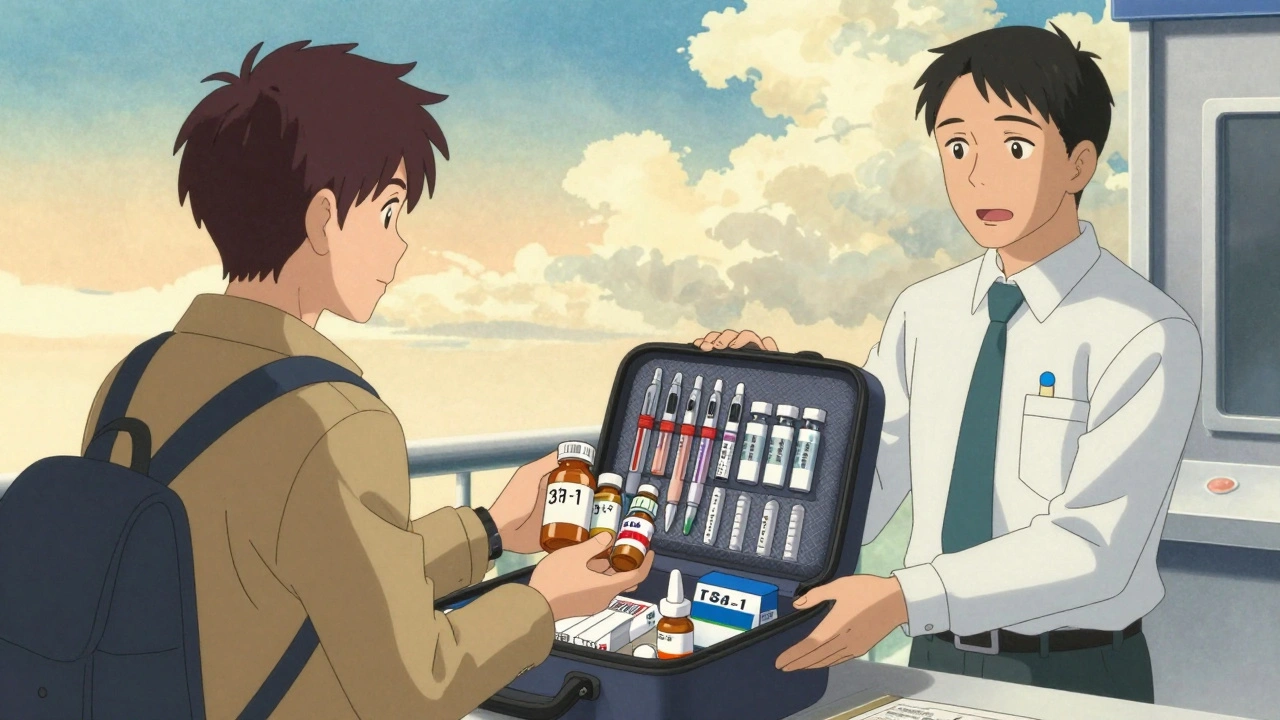
Know exactly how to fly with prescription meds in 2025 without getting stopped. TSA allows unlimited prescriptions, exempts liquids from 3-1-1 rules, and lets you bring insulin, CBD, and medical devices-but only if you follow these key steps.
CONTINUE READING
An overview of the safety risks associated with DPP-4 inhibitors, focusing on the link between gliptins and acute pancreatitis, alongside guidance for monitoring and alternatives.




© 2026. All rights reserved.