

Supplement & Medication Interaction Checker
Enter the medications and supplements you're taking to check for potential interactions. This tool is for informational purposes only and should not replace professional medical advice.
Results
Why This Matters
Warning: Unlike prescription drugs, supplement labels don't have to list interaction warnings. Only 12.7% of popular supplements voluntarily include them.
Always check with your doctor or pharmacist before combining supplements with medications. Many natural ingredients can significantly reduce effectiveness or increase risks.
Every year, millions of Americans take supplements alongside prescription drugs - and many have no idea they might be putting their health at risk. You grab a bottle of magnesium, a green tea extract, or CoQ10 because it’s labeled "natural" and "safe." But what if that supplement quietly cuts the power of your blood thinner, your thyroid medication, or your diabetes drug? The truth is, supplement labels don’t tell you the full story - and that’s by design.
What’s on a Supplement Label (and What’s Missing)
Look at the back of your supplement bottle. You’ll see a section called "Supplement Facts." It lists the serving size, how much of each ingredient is in one dose, and sometimes a % Daily Value. That’s the law. But here’s the catch: there’s no legal requirement for supplement makers to warn you about drug interactions.
Compare that to a prescription pill bottle. It has a "Warnings" section that tells you exactly what not to mix with it - like "Do not take with warfarin" or "May reduce effectiveness of statins." OTC drugs like ibuprofen or allergy pills have the same clear warnings. But for supplements? Silence.
The FDA doesn’t approve supplements before they hit the shelf. Unlike drugs, which go through years of testing for safety and interactions, supplements are only reviewed after someone gets hurt. In 2022, the FDA logged nearly 2,000 adverse events linked to supplements. Almost 30% of those involved interactions with medications. That’s not a fluke. That’s a pattern.
Why You Can’t Trust "Natural"
"Natural" doesn’t mean safe. Red yeast rice sounds harmless - until you learn it contains monacolin K, the exact same compound as the prescription statin lovastatin. Taking it with another statin? You’re doubling your dose. That can cause muscle damage, kidney failure, even death.
St. John’s wort? People use it for mood support. But it cuts the blood levels of digoxin - a heart medication - by 26%. That’s enough to make your heart rhythm unstable. Green tea extract? It’s loaded with vitamin K, which directly interferes with warfarin, a common blood thinner. Studies show it can reduce warfarin’s effect by up to 50%. That means clots, not protection.
Even something as simple as vitamin C can be dangerous. If you’re on antiretroviral drugs for HIV, taking more than 1,000 mg a day of vitamin C can lower the drug’s effectiveness by 22%. Why? It changes the pH in your gut, making absorption unpredictable.
How to Actually Read a Supplement Label
Here’s how to go beyond the hype:
- Check the Supplement Facts panel - not just the front label. Pay attention to serving size. Many people assume one capsule is a full dose, but some products require two or three capsules to hit the listed amount.
- Look for proprietary blends. These are mystery mixes. The label says "proprietary blend: 500 mg," but doesn’t say how much of each ingredient is in there. That’s a red flag. You can’t assess risk if you don’t know what you’re taking.
- Write down every ingredient. Don’t rely on memory. Take a photo of the label. Use it when you talk to your doctor or pharmacist.
- Search for each ingredient. Go to the FDA’s website or use a free tool like Medscape’s Drug Interaction Checker. Type in your supplement ingredient + your medication. It’ll tell you if there’s a known interaction.
One user on Reddit shared: "I take levothyroxine and wanted to start magnesium. The label said nothing. I called three pharmacists. Two said it was fine. The third said it could reduce absorption. I waited until my endocrinologist confirmed it." That’s the level of caution you need.
What the FDA Isn’t Telling You
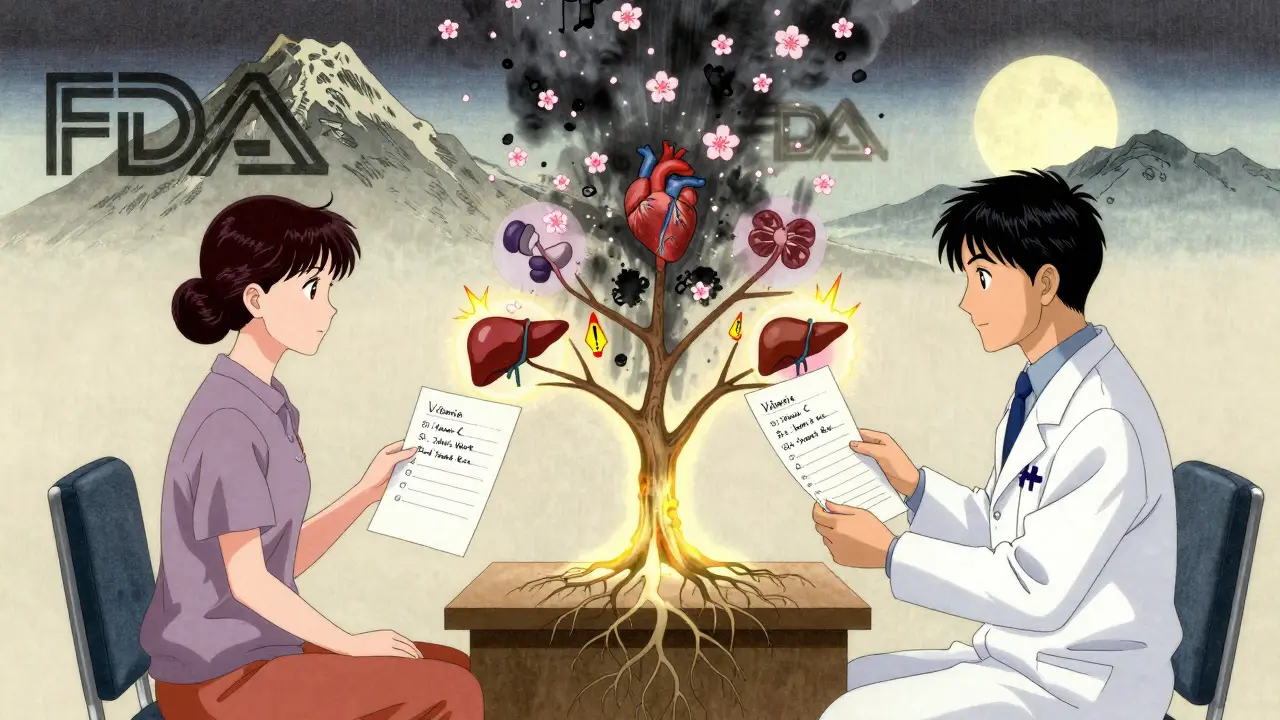
The FDA has the power to force drug companies to update labels when new risks appear. In 2022 alone, they mandated 217 label changes for prescription drugs. But for supplements? Nothing. Manufacturers can choose to add interaction warnings - and only 12.7% of the 500 most popular supplements do.
And here’s the kicker: most people think the FDA approves supplements before sale. A 2023 survey found 62% of supplement users believe that. It’s not true. The FDA only steps in after harm is done - and even then, they’re stretched thin. Their entire office for supplement oversight had a $4.7 million budget in 2023. That’s 0.03% of the FDA’s total budget.
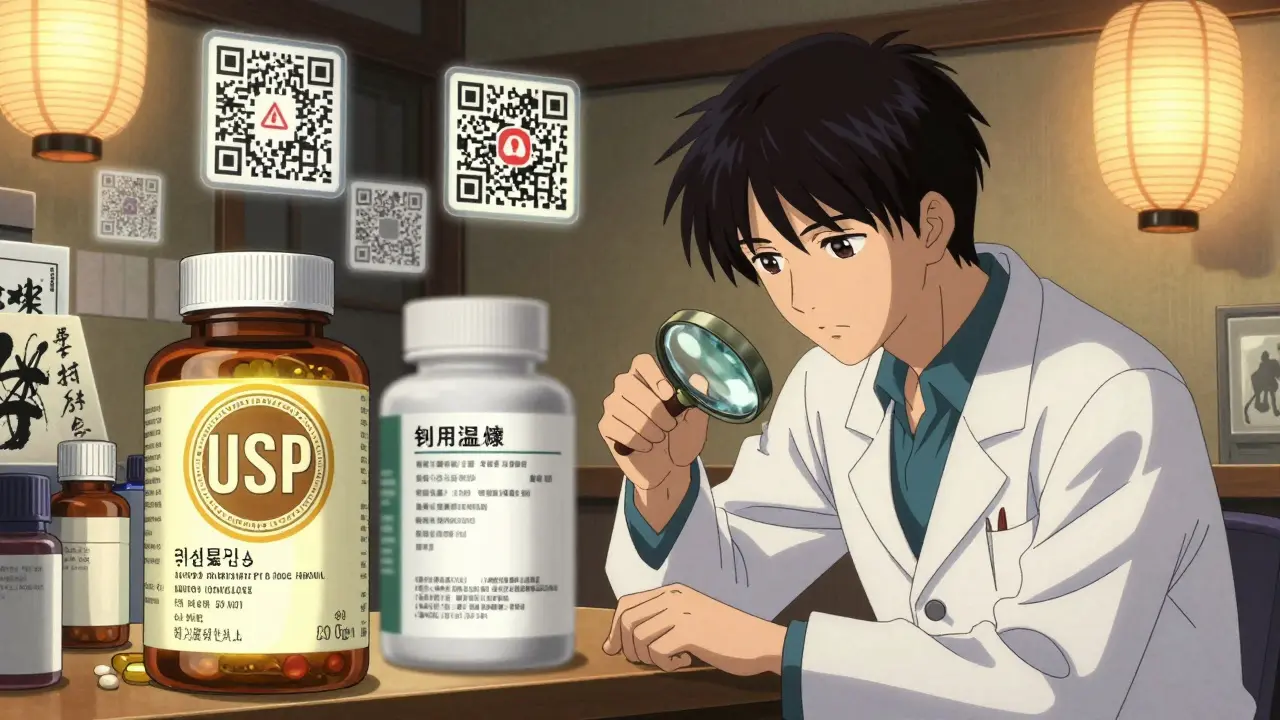
That’s why voluntary certifications like USP (U.S. Pharmacopeia) matter. Only 18% of supplement brands carry the USP mark. But here’s the proof: USP-tested products had 92% accuracy in ingredient labeling. Non-certified? Only 67%. If you’re going to take something daily, choose USP-verified. It’s not foolproof, but it’s a step up.
Real Risks, Real Stories
One woman with type 2 diabetes started taking milk thistle to "support her liver." She was on metformin. Within weeks, her blood sugar dropped to 42 mg/dL - dangerously low. She passed out at work. Her doctor later confirmed: milk thistle can enhance metformin’s effect, leading to severe hypoglycemia.
Another man took CoQ10 for heart health while on warfarin. His INR (a blood clotting measure) dropped sharply. He didn’t know CoQ10 can reduce warfarin’s effectiveness by 15-25%. He nearly had a stroke.
These aren’t rare cases. They’re predictable. And they’re preventable.
Your Action Plan
Here’s what you should do today:
- Make a list of every supplement you take - including doses.
- Make a list of every medication - prescription and OTC.
- Take both lists to your doctor or pharmacist. Ask: "Do these interact?" Don’t assume they know.
- Use Medscape’s free Drug Interaction Checker. It’s reliable and updated daily.
- Look for USP verification on the label. If it’s not there, ask why.
- Never assume "natural" = safe. If it affects your body, it can interfere with your drugs.
The supplement industry is a $53 billion market. But safety isn’t built into the system. You have to build it yourself.
What’s Coming Next
The FDA released draft guidance in March 2024 suggesting supplement labels include standardized interaction warnings - but it’s still voluntary. The American Medical Association now recommends doctors ask about supplements during annual checkups. That’s progress.
Some brands are testing QR codes on labels that link to real-time interaction databases. If you scan it, you get a report on how your supplement affects your meds. It’s not everywhere yet - but it’s coming.
Until then, don’t wait for the system to catch up. Your health doesn’t have a delay button.
Do supplement labels have to list drug interactions?
No. Unlike prescription and OTC drugs, supplement manufacturers are not required by law to include drug interaction warnings on their labels. Only about 12.7% of popular supplements voluntarily include them, according to FDA data from 2021.
Can I trust the "natural" label on supplements?
No. "Natural" has no legal definition in supplement labeling. Many natural substances - like St. John’s wort, green tea extract, and red yeast rice - have powerful effects that can interfere with medications. Just because something comes from a plant doesn’t mean it’s safe to combine with your prescriptions.
What should I do if my supplement doesn’t list any warnings?
Take a photo of the label and show it to your pharmacist or doctor. Ask specifically: "Does this interact with [your medication]?" Don’t rely on online forums or guesswork. Use the free Medscape Drug Interaction Checker to look up each ingredient. If you’re unsure, don’t take it.
What’s the best way to check for supplement-drug interactions?
Use Medscape’s Drug Interaction Checker (free online). It analyzes over 24,000 drug and supplement pairs. You can also ask your pharmacist to run a check using their clinical database. Avoid relying on Google searches - they often give misleading or incomplete info.
Are there any supplements that are always safe to take with medications?
There’s no blanket answer. Even vitamins like C, D, or E can interfere with certain drugs. For example, high-dose vitamin C can reduce the effectiveness of some HIV medications. Always check each supplement individually. When in doubt, skip it until you’ve consulted a healthcare provider.
Why don’t supplement companies have to test for interactions?
Under the Dietary Supplement Health and Education Act (DSHEA) of 1994, supplement manufacturers aren’t required to prove safety or test for interactions before selling. The FDA can only act after harm occurs. This system hasn’t changed despite the industry growing to over $50 billion a year.





Ojus Save
12 Feb, 2026
so i read this whole thing and honestly? i just took a magnesium pill yesterday and im like… wait did i just risk my life? lol
im from india and we just grab supplements like candy here. no one checks nothing. my uncle takes ashwagandha with his blood pressure med and swears its fine. he’s 72. still walking. so… maybe? idk. 🤷♂️
Luke Trouten
12 Feb, 2026
It’s deeply concerning that the regulatory framework for supplements remains rooted in a 1994 law designed for a much smaller, less commercialized industry. The absence of mandatory interaction warnings isn’t an oversight-it’s a structural failure of public health policy.
When pharmaceutical companies are held to rigorous standards of post-market surveillance and label updates, it’s indefensible that supplements-many of which contain pharmacologically active compounds-are exempt. The FDA’s budget allocation for supplement oversight is not just inadequate; it’s a moral abdication.
What’s needed isn’t more consumer vigilance, but legislative reform. We shouldn’t have to become pharmacists to stay alive.
Gabriella Adams
14 Feb, 2026
I work as a clinical pharmacist and I see this every single day.
Patients come in saying, ‘My naturopath said this was safe,’ and then we run the interaction checker and it’s a red alert-like, ‘DO NOT COMBINE’ red alert.
St. John’s wort with SSRIs? That’s a serotonin syndrome waiting to happen. Green tea extract with warfarin? You’re basically telling your blood to clot like a brick.
And don’t even get me started on people taking calcium supplements with thyroid meds. It’s like pouring sugar in your gas tank and wondering why the car won’t start.
Please, if you take anything besides food, write it down. Bring it to your pharmacist. Don’t trust ‘natural’-trust science. And if your provider shrugs? Find a new one.
Pat Mun
14 Feb, 2026
Okay, so I’ve been taking CoQ10 for years because my cardiologist said it might help with statin-induced muscle pain. I thought I was being smart. Then I read this and realized-wait, I’m also on lisinopril and metformin. Did I just ignore a ticking time bomb?
I’m not mad, I’m just… really disappointed in myself. I’ve been so proud of how ‘informed’ I thought I was. But this article? It’s a gut punch. I Googled every ingredient on my bottle last night. Found three that could interact. One of them was ‘magnesium stearate’-and yes, apparently it can mess with absorption. I didn’t even know that was an ingredient. I thought it was just filler.
I’m calling my pharmacist tomorrow. And I’m printing out the Medscape report. I’m not taking any more supplements ‘just in case’-I’m taking them because I have proof they’re safe. Period.
Also, I just told my mom. She’s 68 and takes 12 supplements. She’s gonna be mad at me. But I’d rather be the annoying daughter than the one who loses her to a preventable interaction.
Carla McKinney
15 Feb, 2026
Wow. This is such a classic case of emotional reasoning masquerading as public health advocacy.
You cite anecdotal stories, cherry-pick statistics, and then imply that because the FDA doesn’t regulate supplements like drugs, they’re all dangerous. That’s not evidence-it’s fearmongering.
Let’s be clear: thousands of people take supplements safely every day. Many are harmless. Many are beneficial. The problem isn’t the supplements-it’s the people who take them without understanding dosage, context, or physiology.
And let’s not pretend the pharmaceutical industry is some angelic guardian of safety. Drug interactions kill more people annually than supplement interactions. Yet no one is screaming for FDA to ban ibuprofen because it interacts with blood thinners.
This isn’t about safety. It’s about control. And frankly, it’s condescending to assume the public is too stupid to read a label or ask a pharmacist.
Gloria Ricky
15 Feb, 2026
okay but like… i just wanna say thank you??
i’ve been taking turmeric for my knees and i never even thought to check if it did anything with my blood pressure med. i just assumed since it’s ‘natural’ it was chill.
just called my pharmacist. she was like ‘ohhh yeah turmeric is a blood thinner too, you’re lucky you didn’t bleed out.’
so i stopped it. and now i’m writing down everything. and i even took a pic of my bottle and sent it to my sister. she’s gonna do the same.
you’re right. we gotta do this for ourselves. no one else will. love y’all. 🤗
Sonja Stoces
16 Feb, 2026
OMG I KNEW IT 😤
So like, I’ve been saying this for YEARS. Supplements are a SCAM. The whole industry is built on people being dumb and trusting ‘natural’ because they want to believe magic fairy dust fixes things.
And now you’re telling me vitamin C messes with HIV meds? DUH. Of course it does. Your body doesn’t care if it came from a tree or a lab. It’s chemistry, people.
Also-why are we still using ‘USP verified’ like it’s some golden stamp? That’s just a paid membership. I checked. Some brands pay to get it. Doesn’t mean they’re safe. Just means they have better marketing.
Stop glorifying ‘expertise.’ Just stop taking stuff unless a doctor tells you to. Period. 🙄
Kristin Jarecki
17 Feb, 2026
The regulatory gap between pharmaceuticals and dietary supplements represents one of the most significant public health vulnerabilities in modern American medicine.
While the FDA mandates double-blind, placebo-controlled trials for new drug approvals, supplements are permitted to enter the market under the presumption of safety, with no requirement for efficacy, purity, or interaction testing.
This disparity is not merely bureaucratic-it is ethically indefensible. When a patient takes a supplement containing red yeast rice alongside a statin, they are unknowingly self-administering a double dose of a potent HMG-CoA reductase inhibitor. The risk of rhabdomyolysis is not theoretical-it is quantifiable and documented.
Moreover, the notion that ‘consumer vigilance’ is a sufficient safeguard ignores systemic inequities: patients without access to pharmacists, those with limited health literacy, and those reliant on culturally embedded practices are disproportionately at risk.
Legislative action is not optional. It is imperative.
Jonathan Noe
18 Feb, 2026
Bro, I’ve been taking creatine, fish oil, and vitamin D for 5 years. Never had a problem. My gym bro says the same. Why are we acting like every supplement is a landmine?
Also, you say ‘don’t trust natural’-but what about all the drugs that come from plants? Aspirin = willow bark. Morphine = poppy. Quinine = cinchona tree.
So if natural can be medicine, why can’t it be safe? The problem isn’t supplements-it’s people who don’t read the dosage. I take 5g creatine, not 20g. I don’t mix fish oil with blood thinners. Simple.
Stop scaring people. Most of us are fine. The real danger is misinformation.
Jim Johnson
19 Feb, 2026
Hey, I just want to say this saved me.
I was on levothyroxine and started taking iron because I was tired. My doc never asked. I didn’t think to ask. Then I read this and checked Medscape. Iron reduces absorption by like 60%. I stopped it. Two weeks later, my TSH dropped back to normal.
So yeah, I’m not a doctor. But I’m a person who almost screwed up my thyroid. This article? It’s not fear-it’s power.
Now I take a pic of every label. I show my pharmacist. I even made a little spreadsheet. My friends are asking me for advice now. I didn’t ask for this role-but I’ll take it. You’re not alone. We’re learning together. 💪
Suzette Smith
20 Feb, 2026
Wait, so you’re saying I shouldn’t take vitamin E with my blood thinner? But my yoga instructor said it helps circulation? 🤔
Also, I read somewhere that magnesium helps with sleep. So I took it. And now I’m confused. Who do I believe?
Maybe the real issue is that we have too many sources of info and not enough clarity. Not everyone can afford a pharmacist consult. Maybe we need a free government hotline? Like, ‘Supplement Safety Line’? Just a thought.
Sophia Nelson
22 Feb, 2026
Ugh. Another fear-based article. Let me guess-you also think fluoride is poison and vaccines cause autism?
This isn’t education. It’s panic marketing. People are dying from prescription drugs every day. But you pick on supplements because they’re easy targets.
And why is the FDA’s budget relevant? You think more money = better outcomes? Maybe instead of begging for more funding, we should just stop taking supplements altogether. Oh wait-then who’s gonna buy all those ‘detox’ teas?
Go sell your book. I’m not scared.