

When you pick up a prescription and see a different pill than what you’ve been taking-smaller, cheaper, maybe a different color-it’s natural to wonder: is this going to mess with me differently? You’re not alone. Millions of people switch from brand-name drugs to generics every year, often because of cost. But a quiet fear lingers: Do generics cause more side effects? The answer isn’t simple. It’s not just about chemistry. It’s about your body, your mind, and the system that makes these drugs.
What Does ‘Bioequivalent’ Really Mean?
The FDA says generics must be bioequivalent to brand-name drugs. That means the active ingredient-the part that actually treats your condition-must hit your bloodstream at the same rate and in the same amount. The acceptable range? Between 80% and 125% of the brand-name drug’s absorption. Sounds strict, right? But here’s the catch: that’s a 45% window. For most drugs, that’s fine. For others? It can matter. Take levothyroxine, the thyroid hormone replacement. Even a 5% difference in absorption can throw your TSH levels off. Patients who switch between generic manufacturers often report fatigue, weight gain, or heart palpitations-not because the drug stopped working, but because their body adjusted to one formulation, then got hit with another. The FDA doesn’t require consistency across generic makers. So if you’re on a generic made by Company A, then your pharmacy switches to Company B without telling you, your dose might as well have changed.Are Generics Safer? The Data Is Mixed
A 2018 study in PLOS Medicine looked at over 38 clinical trials involving heart drugs, antidepressants, and diabetes meds. It found no difference in hospitalizations, heart attacks, or deaths between brand-name and generic users. That’s reassuring. But then another study, published in the same year by the NIH, analyzed nearly 27,000 adverse event reports. It found that for some drugs-like amlodipine (a blood pressure med)-generics showed higher reporting rates of side effects like swelling in the ankles. But here’s the twist: authorized generics (same drug, same factory, different label) didn’t show the same spike. That suggests the problem isn’t the active ingredient. It’s something else. A 2022 study from Ohio State University found something even more troubling: generic drugs made in India were linked to 54% more severe adverse events-like hospitalizations and deaths-than those made in the U.S. The study focused on older, well-established generics, not new ones. Why? Maybe because manufacturing standards slipped over time. Or maybe because some facilities aren’t inspected as often. The FDA oversees 1,700 generic plants worldwide. Over 60% are outside the U.S., mostly in India and China. That’s a lot of moving parts.The Nocebo Effect: Your Mind Can Trick You
Here’s where things get psychological. In one study, people were given identical placebo pills. Half were told they were a brand-name drug. Half were told they were generic. The group told they were taking the generic reported significantly more side effects-headaches, nausea, dizziness-even though the pills were the same. This isn’t just in the lab. Real patients report worse side effects after switching to generics-even when the drug is chemically identical. Reddit threads are full of stories: “I switched from Synthroid to generic and my anxiety spiked.” “Wellbutrin generic made me feel like I was on edge 24/7.” Pharmacists hear this all the time. One pharmacist in Adelaide told me: “I’ve had patients cry because they think the generic isn’t working. They’re not imagining it. Their body is reacting-but not because of the active ingredient.” The term for this is the nocebo effect. It’s the evil twin of the placebo effect. If you believe something will hurt you, your brain can make it happen. And when you’re told, “This is just a cheap version,” your brain doesn’t forget that.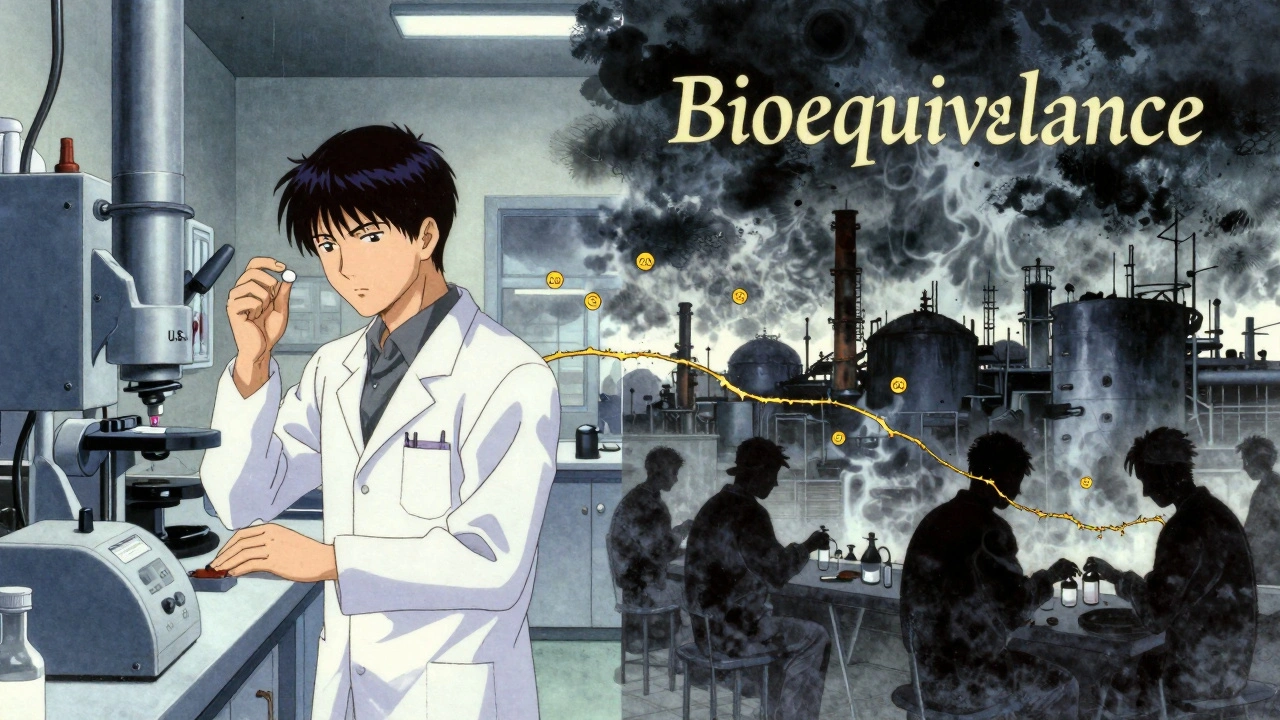
Who’s Most at Risk?
Not everyone is equally vulnerable. People taking drugs with a narrow therapeutic index are at higher risk. These are meds where the difference between a helpful dose and a dangerous one is tiny. Think warfarin (blood thinner), phenytoin (seizure control), or lithium (bipolar). Even a small change in how the drug is absorbed can cause a clot, a seizure, or toxicity. The American Medical Association recommends that for these drugs, doctors write “Dispense as Written” on prescriptions. That means the pharmacy can’t swap the brand for a generic without calling you first. But not all doctors do this. And not all pharmacies honor it unless you insist. Also at risk? Older adults. A 2019 Harvard study found that after generics hit the market for blood pressure drugs like losartan and valsartan, ER visits and hospitalizations jumped by 8% to 14% in seniors. It didn’t prove the generic caused it-but the timing was too close to ignore. Seniors often take multiple meds. A tiny change in absorption can throw off the whole balance.What About Inactive Ingredients?
Generics don’t have to match the brand’s fillers-dyes, binders, preservatives. That’s legal. But for some people, those extras matter. A dye might trigger a rash. A preservative might upset your stomach. One patient I spoke with had chronic diarrhea after switching to a generic version of her antidepressant. She didn’t improve until she went back to the brand. The generic had a different coating that released the drug too fast. Her gut couldn’t handle it. These inactive ingredients aren’t tested for safety in the same way as the active drug. And they’re not listed in detail on the label. So if you’re allergic to lactose, or sensitive to FD&C yellow #5, you might be taking a generic you don’t know about.
What Should You Do?
You don’t need to avoid generics. For most people, they’re safe, effective, and save hundreds a year. But here’s how to protect yourself:- Ask your doctor if your drug has a narrow therapeutic index. If yes, request “Dispense as Written.”
- If you switch generics and feel worse, don’t assume it’s “all in your head.” Go back to your pharmacist. Ask if the manufacturer changed.
- Keep a symptom journal. Note when you switched, what the pill looked like, and when side effects started.
- Use the same pharmacy. They track your meds and can flag changes before they happen.
- Read the label. If the pill looks different than last time, ask why.
- For thyroid meds, blood thinners, or epilepsy drugs, consider sticking with one brand or one generic maker-even if it costs more.
Is the System Fixing Itself?
The FDA has stepped up inspections. In 2010, they checked 42 generic plants. In 2022, they checked 317. The Generic Drug User Fee Amendments (GDUFA) now require manufacturers to pay fees for inspections and data reviews. That’s good. But with 63% of plants overseas, oversight is still a challenge. Meanwhile, research is getting smarter. The FDA’s Sentinel Initiative now tracks 300 million patient records to spot patterns in real time. A 2023 study in JAMA Network Open found that people with certain genetic profiles were 2.3 times more likely to have bad reactions to generic venlafaxine. That means someday, your genes might tell your doctor which version of a drug is safest for you. For now, the consensus is clear: for most people, generics are just as safe. But for some? The difference isn’t just in the pill. It’s in the details.Are generic drugs less effective than brand-name drugs?
No, for the vast majority of medications, generics are just as effective. The FDA requires them to deliver the same amount of active ingredient into your bloodstream within the same timeframe as the brand-name version. Studies involving heart drugs, antidepressants, and diabetes medications show no difference in outcomes like hospitalizations or deaths. However, for drugs with a narrow therapeutic index-like warfarin or levothyroxine-even small differences in absorption can matter. That’s why consistency in manufacturer matters for these drugs.
Why do some people report worse side effects with generics?
There are two main reasons. First, generics can have different inactive ingredients-dyes, fillers, coatings-that may irritate some people’s stomachs or trigger allergies. Second, the nocebo effect plays a big role. If you believe a generic is inferior, your brain can amplify symptoms like headaches, nausea, or anxiety-even if the drug is chemically identical. Studies show patients report more side effects when told they’re taking a generic, even when it’s a placebo.
Should I avoid generics made in India or China?
Not necessarily. The FDA inspects manufacturing facilities worldwide, including those in India and China. However, a 2022 study found that generics made in India were linked to 54% more severe adverse events than those made in the U.S., especially for older, long-standing drugs. This may reflect inconsistent quality control, not the country itself. The key is to know your manufacturer. If your pharmacy switches your generic without warning, ask who made it. Stick with a brand you’ve had success with, even if it’s not the cheapest.
Can I ask my pharmacist to keep me on the same generic manufacturer?
Yes. Pharmacists are required to dispense the exact drug prescribed. If your doctor writes “Dispense as Written,” they can’t switch manufacturers without your consent. Even if they don’t, you can ask to stay on the same generic version. Many pharmacies will honor this request, especially for drugs like thyroid meds or blood thinners. Keep your pharmacy updated on any side effects you notice after a switch.
What should I do if I think a generic is causing side effects?
Don’t stop taking your medication without talking to your doctor. First, check if the pill looks different from your last fill-color, shape, markings. Then call your pharmacy and ask if the manufacturer changed. Keep a log of when symptoms started and what you were taking. If you suspect the generic, ask your doctor to switch you back to the brand or to a different generic. Report the side effect to the FDA’s MedWatch program. Your report helps track safety issues.





Annie Gardiner
8 Dec, 2025
Okay but have you ever actually looked at the fillers in generic levothyroxine? I switched once and my hair started falling out like it was in a horror movie. Turns out the new version had lactose monohydrate and I’m allergic. No one tells you that. The label just says 'inactive ingredients.' Like that’s a get-out-of-jail-free card for Big Pharma.
Rashmi Gupta
8 Dec, 2025
India makes 40% of the world’s generics. We don’t cut corners-we engineer solutions. If your body reacts, maybe it’s not the pill. Maybe it’s your expectations. We’ve been making these for decades. Your fear is not our failure.
Kumar Shubhranshu
9 Dec, 2025
Generic works. Stop crying. Your body adapts. Or you’re weak.
Mayur Panchamia
9 Dec, 2025
America whines about generics while buying iPhones made in China?!?!?!! We make life-saving drugs for the entire planet-while you cry because your thyroid pill looks different!! You want brand-name? Pay $500 a month. Or shut up and take the pill!!
Kenny Pakade
9 Dec, 2025
Let me guess-you’re one of those people who thinks ‘Made in India’ means ‘Made in a basement with a microwave and a dream.’ Newsflash: the FDA inspects those plants. If they didn’t pass, they’d be shut down. Your fear is just fear-mongering dressed up as concern.
Gwyneth Agnes
11 Dec, 2025
If you can’t afford brand-name, you shouldn’t be on the drug. Simple.
Ashish Vazirani
12 Dec, 2025
Let me tell you what happened to my cousin in Jaipur-she was on a generic blood thinner, switched manufacturers, and ended up in ICU with a hemorrhage. The pharmacy didn’t even tell her. The label changed. The pill color changed. The packaging changed. But the paperwork? Nothing. No warning. No consent. Just… silence. That’s not healthcare. That’s roulette with your life.
And now they want us to trust the system? The same system that let contaminated heparin into the US in 2008? The same one that still hasn’t fixed the inspection backlog? I’m not paranoid-I’m just awake.
Kay Jolie
13 Dec, 2025
It’s fascinating, really-the epistemological dissonance between pharmacokinetic equivalence and phenomenological experience. The FDA’s 80–125% bioequivalence window is statistically permissible, yet ontologically inadequate for patients with polypharmacy, metabolic polymorphisms, or psychosomatic sensitivity. The nocebo effect, while real, is not exhaustive; it fails to account for inter-formulation variability in excipient bioavailability, particularly with enteric-coated or sustained-release matrices. We’re treating patients like data points, not embodied subjects.
And don’t get me started on the structural inequities: why should a diabetic in rural Ohio be forced to gamble with their glycemic control because their insurer won’t cover the brand? This isn’t about cost-it’s about dignity.
Max Manoles
15 Dec, 2025
I’ve been a pharmacist for 18 years. I’ve seen patients cry over generic switches. I’ve seen TSH levels spike after a manufacturer change. I’ve also seen people get worse on brand-name after a switch back-because their body adapted to the generic. It’s not about right or wrong. It’s about consistency. My advice? Always ask for the manufacturer name. Write it down. Stick with it. And if your doctor won’t write ‘Dispense as Written,’ find a new one.
Also-keep a pill log. Take a picture of the pill each time. It helps. Trust me.
Arjun Deva
16 Dec, 2025
Did you know the FDA gets 90% of its generic drug inspection funding from the manufacturers themselves? That’s right. The companies pay to be inspected. And guess who picks the inspectors? The same companies. The whole system is rigged. They’re letting Chinese labs pass with fake records while your grandma’s blood thinner turns into poison. And they call it ‘regulation.’ This isn’t science-it’s corporate theater. The FDA is a puppet. And we’re all just watching the show.
And don’t tell me ‘it’s safe.’ My neighbor died last year. Generic metformin. Liver failure. They said it was ‘idiopathic.’ But the pill? Made in a factory that got a warning letter in 2021. And no one told her.
Priya Ranjan
18 Dec, 2025
People who blame generics for side effects are just too lazy to read the label or take responsibility. If you’re allergic to dyes, you should’ve asked. If you’re sensitive to fillers, you should’ve researched. If you believe in the nocebo effect, you should’ve meditated. This isn’t 1990. Information is free. Your ignorance isn’t someone else’s problem.
And for the love of science-stop romanticizing brand-name drugs. They’re just the original version of something we’ve already proven works. You’re not special. Your body isn’t magic. Take the pill and move on.