
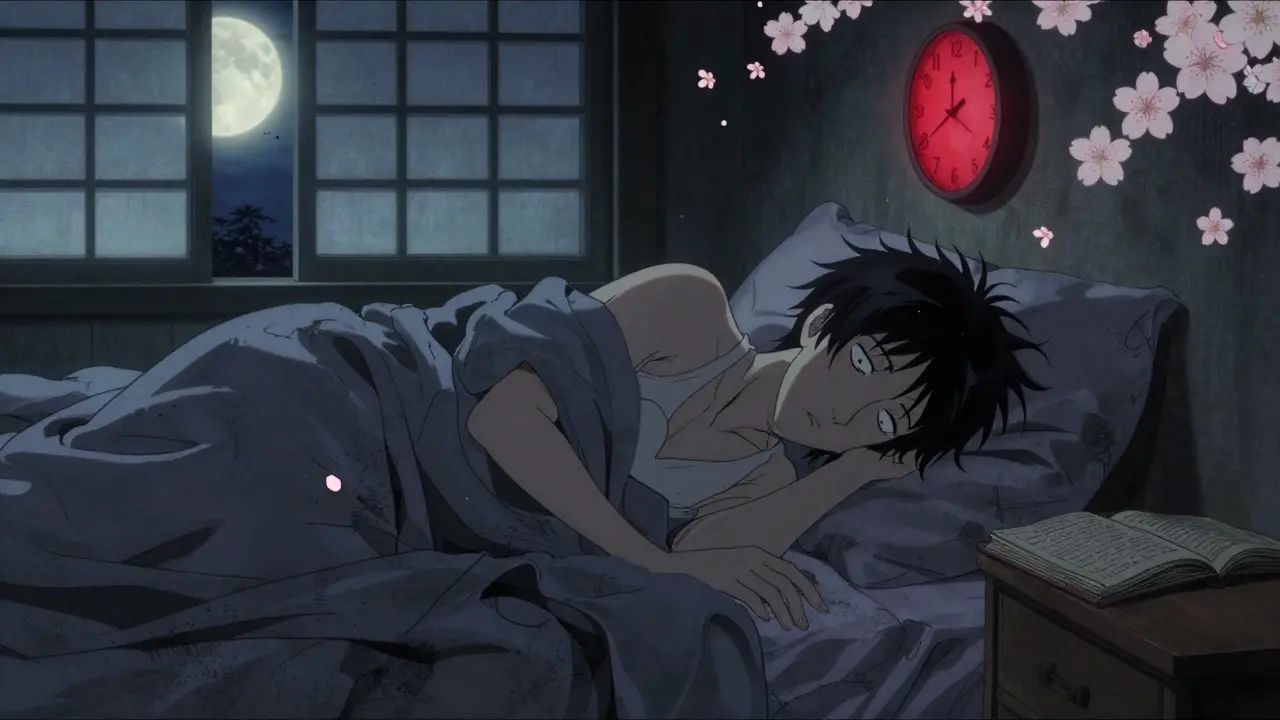
If you’ve been lying awake for hours night after night, only to drag yourself through the day exhausted, you’re not broken. You’re stuck in a cycle most doctors never teach you how to break. Sleep restriction therapy isn’t about sleeping less-it’s about sleep restriction therapy forcing your body to finally sleep well. And it works-faster and longer than pills.
Why Your Bed Feels Like a Prison
Most people with insomnia spend too much time in bed. Not because they want to, but because they’re desperate. You go to bed at 11 p.m., toss and turn until 2 a.m., get up for coffee, read, scroll, then try again at 1 a.m. By morning, you’ve spent 8 hours in bed… and only slept 5. That’s the trap. Your brain starts associating your bed with wakefulness, worry, and frustration. The more you try to force sleep, the more it slips away. Sleep restriction therapy flips this script. Instead of adding more time in bed, you take it away-on purpose. You limit your time in bed to match how much you’re actually sleeping. If you’re only getting 5 hours of sleep a night, you’re only allowed 5 hours in bed. No more. No less. It sounds cruel. But within days, your body starts to respond.How Sleep Restriction Therapy Actually Works
This isn’t guesswork. It’s science-backed, step-by-step, and built on decades of research from Stanford, Johns Hopkins, and the American Academy of Sleep Medicine. Here’s how it breaks down:- Track your sleep for 7 days. Write down exactly when you get into bed, when you fall asleep, when you wake up, and any time you’re awake during the night. No estimates. Use a notebook or a free app like CBT-i Coach. Your goal is to find your average total sleep time. If you slept 4.5, 5, 6, 4, 5.5, 5, and 6 hours over seven nights, your average is about 5.2 hours.
- Set your initial time-in-bed limit. Round down to the nearest half-hour. So 5.2 hours becomes 5 hours. That means if you need to wake up at 6 a.m., you can only get into bed at 1 a.m. No earlier. No exceptions.
- Stick to a fixed wake time. This is non-negotiable. Even on weekends. Even if you’re exhausted. Your body needs consistency to reset its internal clock. Set an alarm. Don’t snooze.
- Don’t nap. Not even for 10 minutes. Napping kills sleep pressure-the biological drive that makes you fall asleep. If you nap, you’re undoing the whole point.
- Wait for sleep efficiency to improve. Sleep efficiency = (total sleep time ÷ time in bed) × 100. You’re aiming for 85-90%. Once you hit that for three nights in a row, you add 15 minutes to your time-in-bed. So 5 hours becomes 5 hours 15 minutes. Keep going until you’re sleeping 7-8 hours efficiently.
This process takes 6 to 8 weeks. It’s not quick, but the changes are real. People who stick with it report falling asleep in under 15 minutes-not after an hour. They wake up once, maybe twice, instead of five times. And they stop dreading bedtime.
What You’ll Feel in the First Two Weeks
Let’s be honest: the first week is rough. You’ll be tired. Maybe even foggy-headed. You might feel irritable. You might catch yourself nodding off at your desk. That’s normal. It’s not a sign you’re doing it wrong-it’s a sign your body is adjusting. A 2023 survey from Sleepstation.org.uk found 68% of people reported significant daytime sleepiness during the first 1-2 weeks. That’s not a bug. It’s a feature. You’re creating sleep pressure. Your body is learning to use every minute of bed time for actual sleep. But here’s the key: this fatigue fades. By week three, most people start noticing they’re sleeping deeper. The anxiety around sleep drops. The constant monitoring of the clock stops. You stop checking your phone at 2 a.m. because you know you won’t be awake long.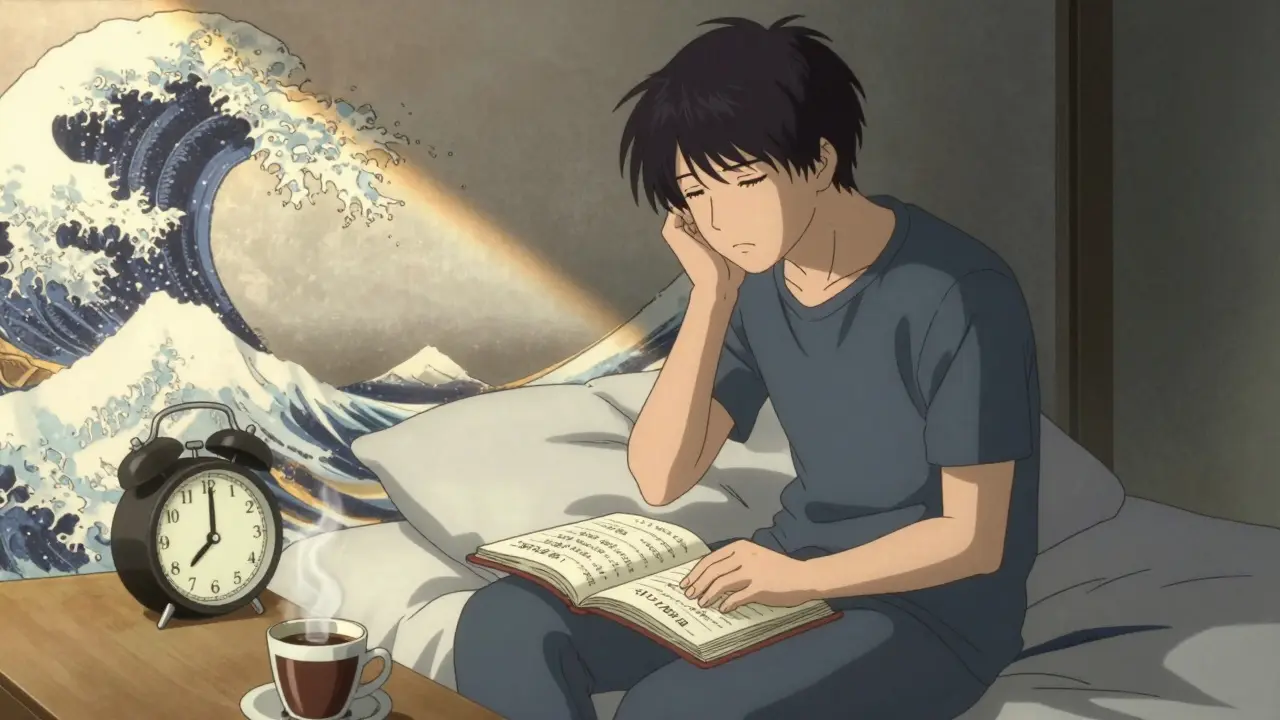
Why It Beats Sleeping Pills
Pills like zolpidem or benzodiazepines might help you fall asleep tonight. But tomorrow? You might feel groggy. In a month? You might need more. In six months? You might not be able to sleep without them. And when you stop? The insomnia comes back-worse than before. Sleep restriction therapy does the opposite. It doesn’t mask the problem. It fixes it. A 2023 meta-analysis showed SRT improved sleep efficiency by 47% more than just reading sleep hygiene tips. In 10 out of 10 studies, participants cut their time awake in bed in half. And unlike pills, the benefits last. A 2023 study from Sleepstation.org.uk tracked people a year after finishing SRT. 78% still slept well. Only 32% of people who used medication did. That’s the difference between temporary relief and permanent change.Who Should Avoid It
This isn’t for everyone. If you have:- Severe depression or bipolar disorder
- Sleep apnea or restless legs syndrome
- A job that requires driving or operating heavy machinery (like trucking or surgery)
- Chronic medical conditions that cause extreme fatigue
Then you need to talk to a sleep specialist first. Sleep restriction therapy can be dangerous if your body can’t handle even temporary sleep deprivation.
Also, if you’re the type who can’t stick to a schedule-especially on weekends-this won’t work. Skipping the 1 a.m. bedtime because it’s Friday? That breaks the protocol. You’ll reset your progress. Consistency is everything.
What Works Best Alongside It
Sleep restriction therapy doesn’t work alone. It’s the backbone of CBT-I (Cognitive Behavioral Therapy for Insomnia). But it’s most powerful when paired with stimulus control therapy. Stimulus control means:- Only use your bed for sleep and sex
- If you’re awake for more than 20 minutes, get up. Go to another room. Read under dim light. Don’t check your phone.
- Only return to bed when you’re sleepy.
- Same wake time every day-no exceptions.
Together, these two techniques break the mental link between bed and wakefulness. They tell your brain: This bed is for sleep. Nothing else.
Some people also benefit from cognitive therapy-challenging thoughts like “I’ll never sleep again” or “If I don’t sleep 8 hours, I’ll collapse.” But those come later. First, fix the behavior. The thoughts follow.
Real People, Real Results
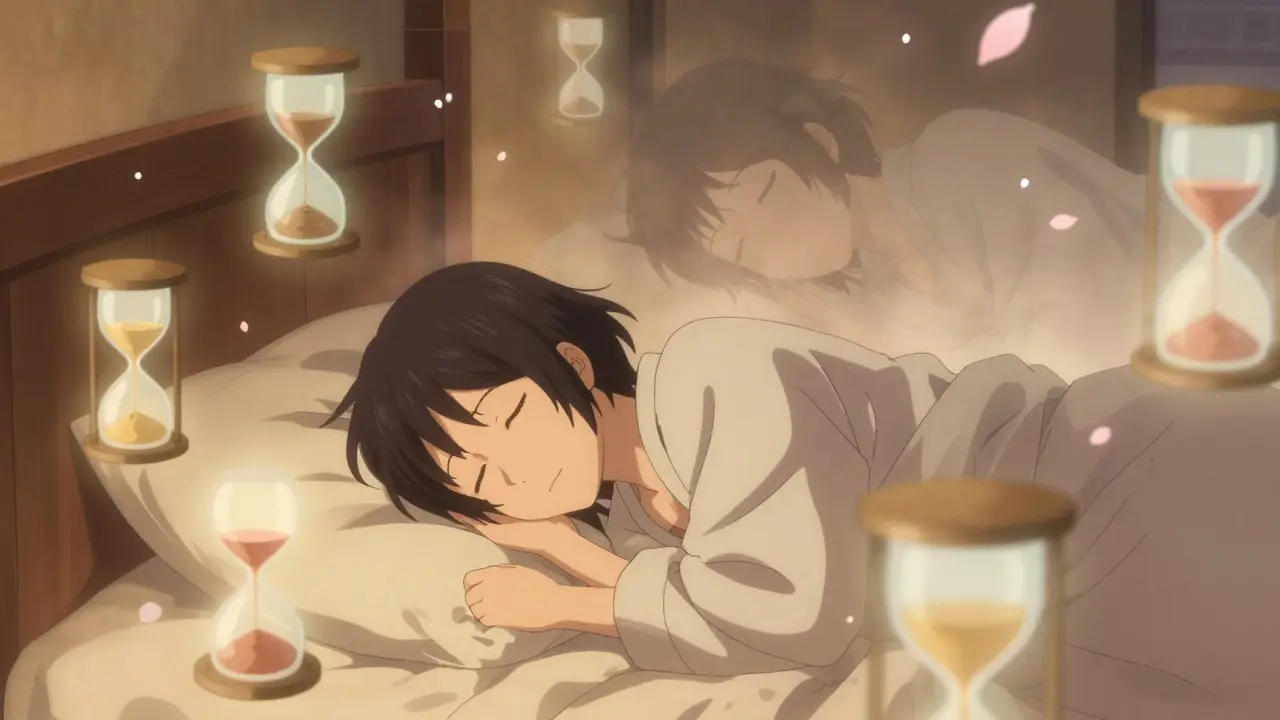
On Reddit’s r/Insomnia, a user named SleepSeeker89 wrote: “After 3 weeks of strict SRT, my sleep efficiency jumped from 68% to 89%. I fall asleep in 15 minutes now, not 90.” Another user, TiredButSleeping, said: “I used to spend 9 hours in bed for 6 hours of sleep. Now I get 7.5 hours in 8 hours-with almost no waking up.” These aren’t outliers. They’re the norm for people who follow the rules.How to Get Started
You don’t need a therapist to begin-though it helps. Here’s your roadmap:- Get a sleep diary. Use paper, Google Sheets, or the free CBT-i Coach app (from the U.S. Department of Veterans Affairs).
- Track for 7 days. No guessing. Write it down immediately after waking.
- Calculate your average sleep time. Round down to the nearest 30 minutes.
- Set your bedtime based on your fixed wake time.
- No naps. Ever.
- Use stimulus control: get up if awake over 20 minutes.
- Wait for sleep efficiency to hit 85% for 3 nights. Then add 15 minutes.
- Repeat until you’re sleeping 7-8 hours efficiently.
If you’re overwhelmed, try a digital CBT-I program like Sleepio or Somryst. Both are FDA-cleared and include automated sleep restriction protocols. Somryst showed 64% effectiveness in a 2023 VA study.
The Bottom Line
Sleep restriction therapy isn’t glamorous. It doesn’t come in a pill. It doesn’t promise overnight miracles. But if you’re tired of chasing sleep, tired of pills, tired of feeling like your body betrayed you-this is your best shot.It works because it’s honest. Your body knows how to sleep. It just got confused. Sleep restriction therapy doesn’t trick it. It reteaches it.
And after a few weeks? You’ll wonder why no one told you this sooner.
Can I do sleep restriction therapy on my own?
Yes, many people successfully do it alone using sleep diaries and apps like CBT-i Coach. But if you have anxiety, depression, or other medical conditions, working with a CBT-I-certified therapist improves safety and success rates. About 1,200 certified providers exist in the U.S., and many offer virtual sessions.
What if I can’t stick to the same wake-up time on weekends?
Skipping your wake time-even by an hour-can undo progress. Sleep restriction therapy relies on consistency to reset your circadian rhythm. If you can’t commit to the same wake time every day, this therapy may not be right for you right now. Consider starting with stimulus control first, then try SRT later.
How long until I see results?
Most people notice improvements in sleep efficiency within 2-3 weeks. Falling asleep faster and waking less often usually happens by week 4. Full benefits-like sleeping 7+ hours without effort-typically take 6-8 weeks. Patience is part of the treatment.
Is sleep restriction therapy the same as sleep deprivation?
No. Sleep deprivation is accidental or forced lack of sleep with no structure. Sleep restriction therapy is a controlled, timed, and monitored process designed to build sleep pressure intentionally. It’s temporary and goal-oriented. You’re not being punished-you’re being retrained.
Will I gain weight from being tired during the first weeks?
Temporary fatigue might increase cravings for carbs or sugar, but this usually passes by week 3. Studies show no long-term weight gain from SRT. In fact, better sleep often leads to improved appetite regulation. Focus on eating balanced meals and staying hydrated during the adjustment phase.
What if I’m a shift worker? Can I still use this?
Shift work makes SRT much harder because your sleep schedule changes constantly. Most experts recommend avoiding SRT if your work hours vary daily. Instead, focus on sleep hygiene, light exposure management, and melatonin timing under professional guidance.
Is this covered by insurance?
In the U.S., only 12 states require insurance to cover CBT-I as of early 2024. Some employer wellness programs (like those at Amazon, Google, and Walmart) now include digital CBT-I apps. Check with your provider or HR department. Digital platforms like Sleepio cost $50-$300-often less than a month’s supply of sleep meds.







TONY ADAMS
26 Jan, 2026
This is the dumbest thing I've ever read. Just take a pill and get some sleep.
Peter Sharplin
26 Jan, 2026
Actually, Tony, that’s the exact problem with pills-they don’t fix the root cause. Sleep restriction therapy is about retraining your brain’s association with bed. It’s not about forcing sleep, it’s about creating the right conditions for it to happen naturally. I’ve seen patients go from 3 hours of sleep to 7 in under two months. No meds. Just structure.
Dan Nichols
26 Jan, 2026
Yeah right, because obviously everyone can just wake up at 6am no matter what. What about people with kids? Or night shifts? Or chronic pain? This sounds like a rich person’s solution for a problem they’ve never actually had
Ashley Porter
26 Jan, 2026
There’s a reason this is part of CBT-I. The sleep efficiency metric is clinically validated. The 85% threshold isn’t arbitrary-it’s the point where sleep architecture begins to normalize. The fatigue phase is the neurochemical reset. It’s not punishment, it’s precision.
Henry Jenkins
27 Jan, 2026
I tried this for 4 weeks. Week one was brutal-I was a zombie at work. But by week three, I stopped checking the clock. Week four, I fell asleep within 10 minutes. No more counting sheep. No more panic. Just… sleep. I didn’t believe it until it happened. The key is not giving up during the worst part. That’s when your brain starts rewiring.
Shawn Raja
27 Jan, 2026
So let me get this straight. You’re telling me to stay awake until 1am so I can sleep better? That’s not therapy. That’s a cult. Next you’ll tell me to meditate in a cold bath while listening to whale songs and chanting ‘I am not my insomnia.’
Renia Pyles
28 Jan, 2026
Wow. So the solution to insomnia is to make yourself more tired? Brilliant. Why didn’t anyone think of this before? Maybe we should just lock people in rooms with no pillows and call it ‘sleep optimization.’
Rakesh Kakkad
28 Jan, 2026
As someone from India, where sleep disorders are often dismissed as laziness or stress, this approach is revolutionary. In my family, they say 'sleep when you're tired.' But that's not how biology works. This method respects the body's rhythm. I tracked my sleep for 14 days. My average was 4.8 hours. I started at 1:30 a.m. bed time. By week three, I was falling asleep before my head hit the pillow. No pills. No magic. Just science.
Simran Kaur
29 Jan, 2026
I cried the first night I followed this. Not because I was sad-but because I finally felt like my body wasn’t broken. For years I thought I was weak for not sleeping. But this? This wasn’t about willpower. It was about resetting a system that had been hijacked. I’m not ‘fixed.’ I’m retrained. And that’s so much more powerful.
Curtis Younker
30 Jan, 2026
Look, I know it sounds harsh. But imagine your bed is like a dating app. If you keep swiping right on someone who never matches back, you stop believing they’re real. Sleep restriction is like deleting the app for a week, then coming back with zero expectations. And suddenly-boom. Connection. It’s not about forcing love. It’s about creating space for it to find you.
Neil Thorogood
31 Jan, 2026
My wife did this. First week? She yelled at me for breathing too loud. Second week? She cried because she missed her Netflix. Third week? She woke up at 6am and said, ‘I feel like I’ve been asleep for a week.’ Now she sleeps 7.5 hours. No meds. No supplements. Just discipline. And yeah, it sucked. But it worked. So I’m not judging. I’m just saying… try it before you write it off.
James Nicoll
1 Feb, 2026
People treat sleep like a reward. It’s not. It’s a biological imperative. You don’t get to negotiate with your circadian rhythm. You either align with it, or you suffer the consequences. This method doesn’t care if you’re busy, tired, or ‘not a morning person.’ It just says: show up. Consistently. And your body will respond. That’s the real lesson here-not sleep. But discipline.
Skye Kooyman
3 Feb, 2026
Has anyone tried combining this with morning sunlight? I started doing 15 mins outside right after waking and my sleep efficiency jumped another 12%. Just a thought.
Uche Okoro
5 Feb, 2026
The neurophysiological mechanism underlying sleep restriction therapy is rooted in the homeostatic sleep drive (Process S) and circadian rhythmicity (Process C). By reducing time-in-bed below sleep efficiency thresholds, you elevate sleep pressure, thereby enhancing sleep consolidation and reducing wake after sleep onset (WASO). The 15-minute increments align with the nonlinear dynamics of sleep architecture recovery. This is not anecdotal-it is empirically replicable.
Allie Lehto
7 Feb, 2026
i just read this and now i feel like a failure for not doing it. like maybe if i just tried harder i’d sleep better. but what if i just… need to rest differently? not be punished? what if my brain just needs softness? not math? 🥺