
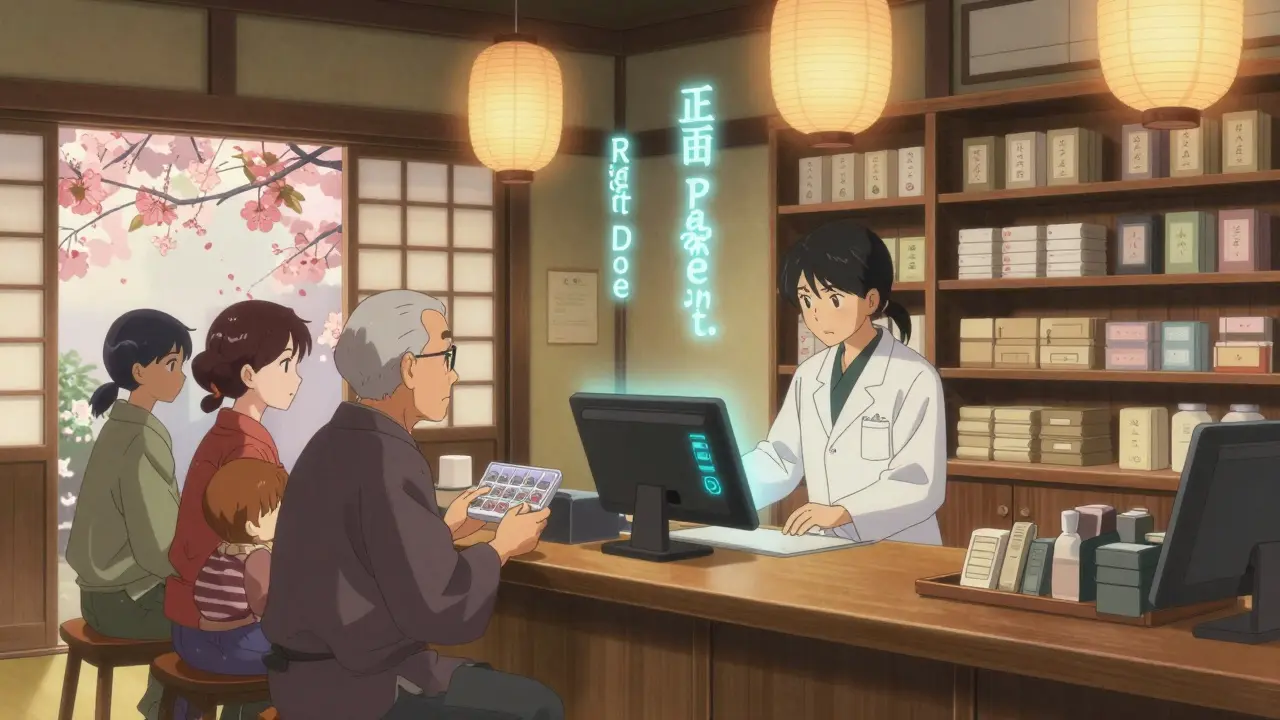
Every year, more than 1.5 million people in the U.S. end up in the emergency room because of problems with their medications. Many of these cases aren’t accidents-they’re preventable. Medication safety isn’t just a hospital policy or a checklist for nurses. It’s the system that keeps you from taking the wrong pill, the wrong dose, or a drug that clashes with something you’re already taking. And it matters just as much for someone picking up antibiotics at the pharmacy as it does for someone managing five chronic conditions at home.
What Exactly Is Medication Safety?
Medication safety means making sure you get the right medicine, in the right amount, at the right time, for the right reason-and that nothing bad happens because of it. It’s not just about doctors writing clear prescriptions. It covers everything: how the drug is made, stored, prescribed, dispensed, taken, and monitored. The whole process, from the pharmacy shelf to your kitchen counter, has to be designed to stop mistakes before they happen.
The Institute of Medicine defines a medication error as any preventable mistake that could lead to harm. That includes giving you the wrong drug because the labels looked too similar, giving you ten times the dose because a decimal point was missed, or not catching that your blood thinner interacts with the new herbal supplement you started. These aren’t rare. They happen every day-and too often, they’re blamed on human error instead of flawed systems.
Why Do Medication Errors Happen?
Errors don’t happen because someone’s careless. They happen because the system is messy. Here’s how:
- Prescribing errors make up 38% of all mistakes. A doctor might write “10 mg” but it’s misread as “100 mg.” Or they forget to check if you’re already on a similar drug.
- Administration errors account for 26%. A nurse gives insulin at the wrong time. A caregiver mixes up liquid doses because they’re using a kitchen spoon instead of a syringe.
- Dispensing errors are 16%. The pharmacy gives you the wrong brand, or the label says “take with food” but doesn’t say which food.
High-alert medications are especially dangerous. Insulin, opioids, blood thinners, and IV drugs like oxytocin can kill you if given wrong-even by a tiny bit. One wrong drop of insulin can send someone into a coma. One extra milligram of fentanyl can stop breathing.
And it’s not just in hospitals. At home, people skip doses because they can’t afford the pills. They stop taking antibiotics when they feel better. They mix old meds with new ones without telling their doctor. The CDC found that 42% of older adults do this. That’s not rebellion-it’s confusion, fear, or financial stress.
Who’s Most at Risk?
Some people are more likely to be hurt by medication errors. That doesn’t mean they’re at fault. It means the system isn’t built for them.
- Children make up 20% of all medication-related ER visits. Kids need doses based on weight, not age. A teaspoon mistaken for a tablespoon can be deadly.
- Older adults (65+) are half of all hospitalizations from drug problems. They often take five or more medications. Each one adds risk. One study showed that with five or more drugs, the chance of a harmful interaction jumps from 5% to 35%-unless there’s a safety system in place.
- Pregnant women need special care. Some drugs can cause birth defects. Others aren’t tested enough. Knowing what’s safe isn’t always easy.
And let’s not forget people with low health literacy. If you don’t understand “take twice daily” or “avoid grapefruit,” you’re already at a disadvantage. The system should meet you where you are-not make you chase answers.
What Works to Prevent Errors?
Good medication safety doesn’t rely on people being perfect. It relies on systems that make mistakes hard to make.
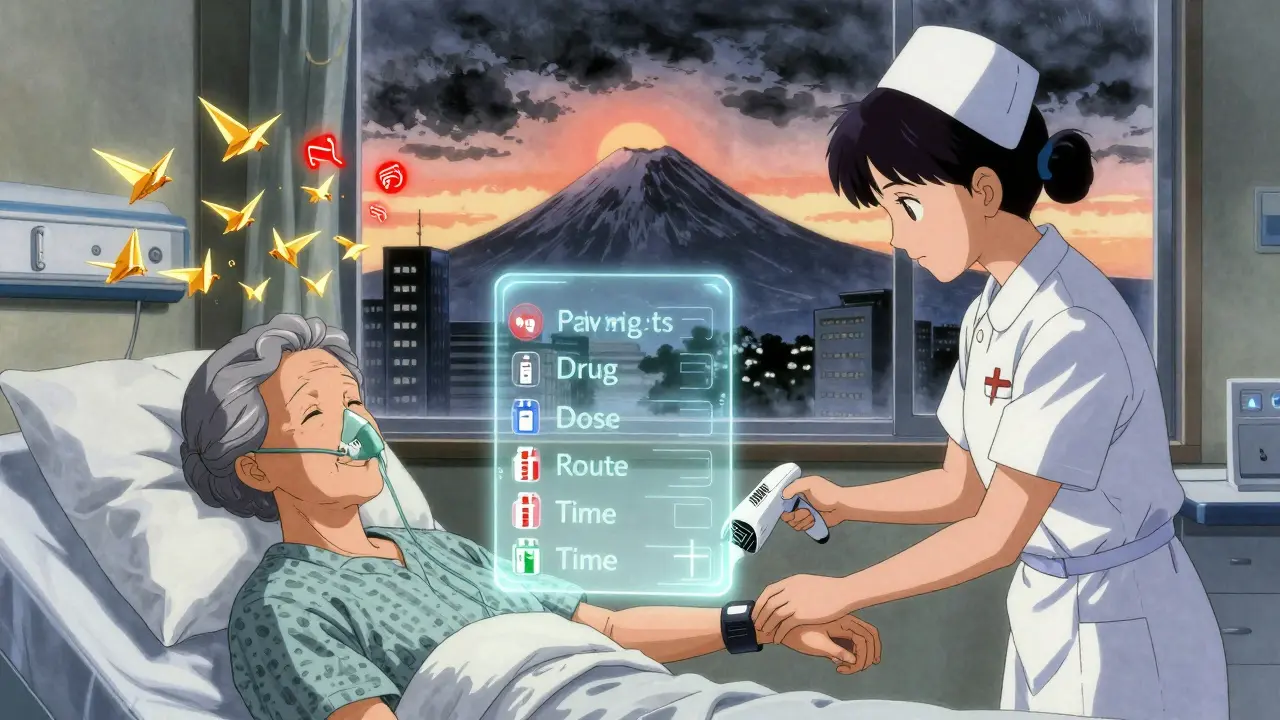
Electronic health records (EHRs) with smart alerts cut serious errors by nearly half. If your doctor tries to prescribe a drug you’re allergic to, the system flashes a warning. If the dose is too high, it says so. Barcode scanning at the bedside-where nurses scan your wristband and the pill before giving it-reduces administration errors by 65%.
The “Five Rights” are the bare minimum: right patient, right drug, right dose, right route, right time. But smart systems add three more: right documentation (did you record it?), right reason (is this actually needed?), and right response (did it help? did it hurt?).
Technology helps, but it’s not magic. Too many alerts can overwhelm staff. If a system pops up 30 warnings during one shift, people start ignoring them. That’s called alert fatigue-and it makes things worse.
What Can You Do as a Patient?
You’re not just a passive recipient of care. You’re the last line of defense.
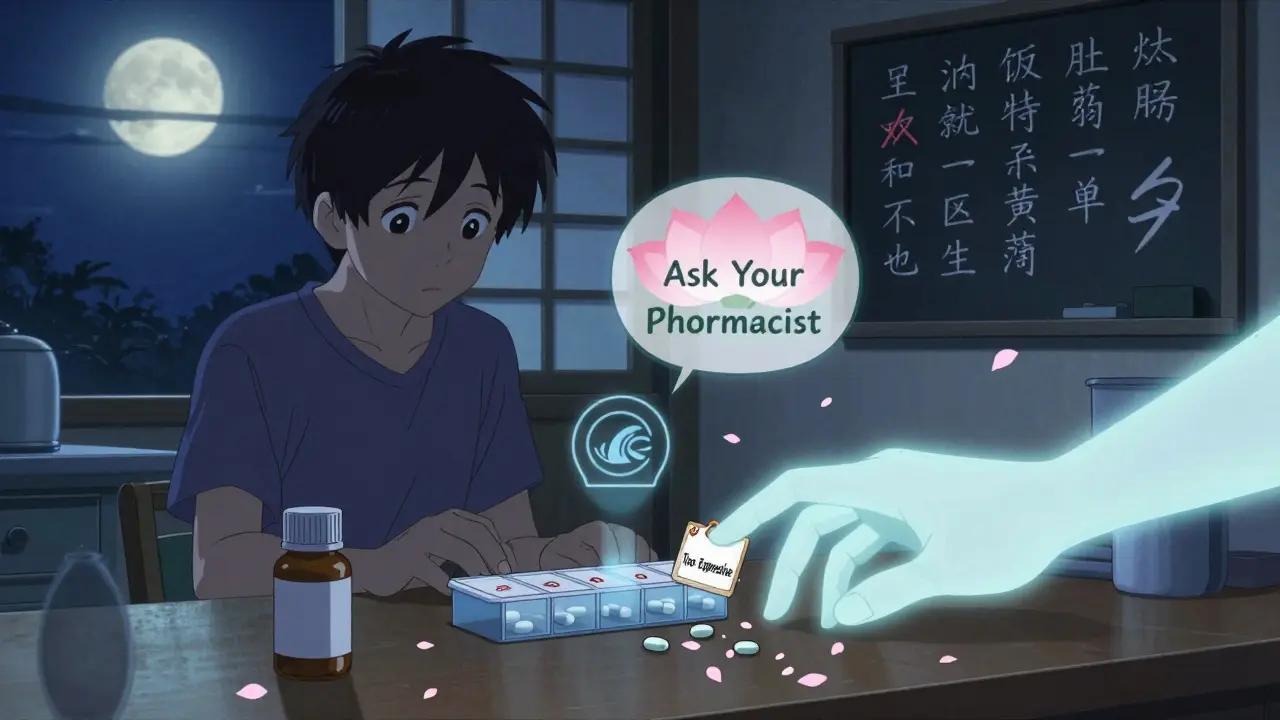
- Keep a current list of every medication you take-prescription, over-the-counter, vitamins, herbs. Include the dose and why you take it. Update it every time something changes. The CDC says this cuts errors during hospital transitions by 45%.
- Ask questions. “What is this for?” “What happens if I miss a dose?” “Is there a cheaper version?” “Could this interact with my other meds?” Don’t be shy. If you don’t understand, say so.
- Use pill organizers or blister packs. They help you remember what to take and when. One study showed 60% better adherence with them.
- Bring your list to every appointment. Even if you’ve been to the same doctor for years. Things change fast.
- Don’t share meds. That pill that helped your friend’s headache might give you a stroke.
And if you’re worried about cost? Talk to your pharmacist. There are often patient assistance programs, generic alternatives, or coupons. Skipping doses because you can’t afford it is a hidden medication error-and it’s preventable.
The Bigger Picture: Why This Isn’t Just a “Healthcare Problem”
Medication errors cost the U.S. healthcare system $42 billion a year. That’s not just hospital bills. It’s lost wages, long-term disability, and families paying for care they shouldn’t have needed.
But here’s the good news: comprehensive safety programs cut errors by 50% to 80%. That’s not theory. That’s real data from hospitals that took the time to fix their systems. The WHO’s global campaign, “Medication Without Harm,” has already cut severe harm by 15-25% in places that fully adopted it.
And the return on investment? Every dollar spent on safety brings back $4.20 in saved costs and better outcomes. That’s not charity. That’s smart business.
Still, progress is slow. Only 55% of U.S. hospitals have fully working clinical decision support. Only 35% of facilities have non-punitive reporting systems. Too many places still blame the nurse, the pharmacist, the doctor-instead of asking: Why did this system let this happen?
What’s Next?
The future of medication safety is getting smarter. AI is being tested to predict which patients are most likely to have bad reactions based on their history, genetics, and habits. Blockchain is being used to track drugs from factory to pharmacy, cutting down fake pills. The FDA just required all prescription labels to use clear numeric dosing-no more “0.5 mg” that could be read as “5 mg.”
But the biggest change won’t come from tech. It’ll come from culture. When patients feel safe asking questions. When providers feel safe admitting mistakes. When systems are designed to protect people-not punish them.
Medication safety isn’t about perfection. It’s about making sure that when you take a pill, you’re not gambling with your life. And that’s something every patient deserves.
What is the most common cause of medication errors?
The most common cause isn’t human error-it’s system failure. Prescribing mistakes (like unclear handwriting or wrong dosing) account for 38% of errors. But these happen because systems don’t prevent them. For example, if a doctor can’t easily see what a patient is already taking, or if labels look too similar, mistakes become likely. Technology like electronic prescribing and barcode scanning helps, but only if they’re used properly.
How can I tell if my medication is safe to take with others?
Always ask your pharmacist or doctor before starting a new medication, even if it’s over-the-counter. Keep a complete list of everything you take-including vitamins, supplements, and herbal remedies. Many dangerous interactions happen with things people assume are harmless, like St. John’s Wort or grapefruit juice. If you’re unsure, use a free medication checker tool from the CDC or a trusted pharmacy website.
Are generic medications less safe than brand-name ones?
No. Generic drugs must meet the same FDA standards as brand-name drugs for safety, strength, quality, and how they work in the body. The only differences are usually in color, shape, or inactive ingredients-which rarely affect safety. If you’ve had a reaction to a brand-name drug, ask your pharmacist if the generic has the same active ingredient. Most of the time, it does.
What should I do if I think I’ve been given the wrong medication?
Don’t take it. Call your pharmacist or doctor right away. If you’ve already taken it and feel unwell-dizzy, nauseous, having trouble breathing-call 911 or go to the ER. Bring the medication with you, including the bottle and label. Even small mistakes, like taking a higher dose than prescribed, can be dangerous. It’s better to be safe than sorry.
Why do I need to update my medication list so often?
Your medication list is your safety net. Every time you start, stop, or change a drug-even temporarily-your list should change too. During hospital visits or ER trips, staff use this list to avoid giving you something that clashes with what you’re already taking. Studies show patients who keep updated lists have 45% fewer errors during care transitions. It’s a simple habit that saves lives.
Can medication safety be improved in home care settings?
Absolutely. Most medication errors happen at home, not in hospitals. Use pill organizers, set phone alarms, and keep all meds in one place out of reach of kids or pets. Ask your pharmacist for blister packs if you take multiple pills daily. If you have trouble reading labels, ask for large-print versions. And never hesitate to call your doctor if something feels off-side effects, confusion, or sudden fatigue could be signs of a bad interaction.



Dikshita Mehta
19 Dec, 2025
Medication safety isn't just about doctors and pharmacists-it's about the whole ecosystem. I've seen elderly patients in India skip doses because they can't afford refills, and no one checks if they're mixing ayurvedic herbs with prescription drugs. Systems need to account for economic reality, not just clinical guidelines.
pascal pantel
21 Dec, 2025
Let’s be real-80% of these ‘errors’ are just patient noncompliance wrapped in victimhood. If you can’t follow a simple script like ‘take once daily,’ maybe you shouldn’t be managing polypharmacy. Blaming the system is just lazy. The real problem is people treating meds like candy.
Gloria Parraz
21 Dec, 2025
I work in home care. I’ve held the hands of people who cried because they had to choose between insulin and groceries. This isn’t about ‘errors’-it’s about a system that treats human beings like data points. When you can’t afford your life-saving drug, the error isn’t yours. It’s ours.
Sahil jassy
22 Dec, 2025
generic drugs are just as good dont let them scam you with brand names the FDA makes sure of it
Janelle Moore
24 Dec, 2025
Ever notice how every time someone gets hurt by a med, it’s always the ‘system’? But when the hospital gives you the wrong pill, they never say ‘the algorithm failed’-they say ‘the nurse messed up.’ Coincidence? Or is this just another way to hide who’s really in charge? I’ve seen the logs. The AI doesn’t lie.
Chris porto
24 Dec, 2025
It’s interesting how we frame this as a safety issue when it’s really a dignity issue. Taking meds isn’t just technical-it’s emotional. People forget. People fear. People feel invisible. Maybe the real fix isn’t more tech, but more presence. Someone asking, ‘How’s this working for you?’ instead of ‘Did you take it?’
Ryan van Leent
24 Dec, 2025
people just dont care anymore its not the systems fault if you forget your pills or mix em up its your fault plain and simple
Adrienne Dagg
25 Dec, 2025
My grandma took 14 pills a day. She didn’t know what half of them were for. The pharmacy gave her a 10-page leaflet. She cried. I threw it out and drew stick figures. 🖍️ She started taking them right. No tech. Just love. And crayons.
Erica Vest
25 Dec, 2025
Electronic prescribing reduces prescribing errors by 47% according to JAMA 2022. But interoperability remains a nightmare-hospitals still fax prescriptions. The tech exists. The will doesn’t. It’s not about capability. It’s about cost centers and legacy infrastructure. We’re optimizing for billing, not safety.
Chris Davidson
27 Dec, 2025
The system is broken because people are lazy. Why should the hospital invest in barcode scanners when you can just read the label? If you cant follow instructions dont expect the world to bend for you
Kinnaird Lynsey
29 Dec, 2025
It’s funny how we call it ‘medication safety’ like it’s a feature, not a right. We wouldn’t say ‘bridge safety’ when a bridge collapses-we’d say ‘someone failed to maintain it.’ Why do we excuse healthcare systems when they kill people? Maybe because we’re not the ones dying.
Glen Arreglo
30 Dec, 2025
In my village in Kenya, we use community health workers to double-check meds. No tech. Just trust, training, and time. Maybe we don’t need AI-we need more humans who care enough to ask, ‘Did you take that?’ and mean it.
benchidelle rivera
1 Jan, 2026
Let me be blunt: if you’re mixing herbal supplements with anticoagulants without telling your provider, you’re not ‘confused’-you’re endangering yourself and others. This isn’t about literacy. It’s about responsibility. The system can’t protect you if you refuse to engage with it. Period.
Kelly Mulder
2 Jan, 2026
It’s profoundly disingenuous to claim generics are equivalent. The bioavailability variance, while statistically insignificant in trials, is clinically meaningful in patients with narrow therapeutic windows. The FDA’s ‘same active ingredient’ standard is a legal fiction. Real pharmacokinetic equivalence? Rare. And the industry knows it.