
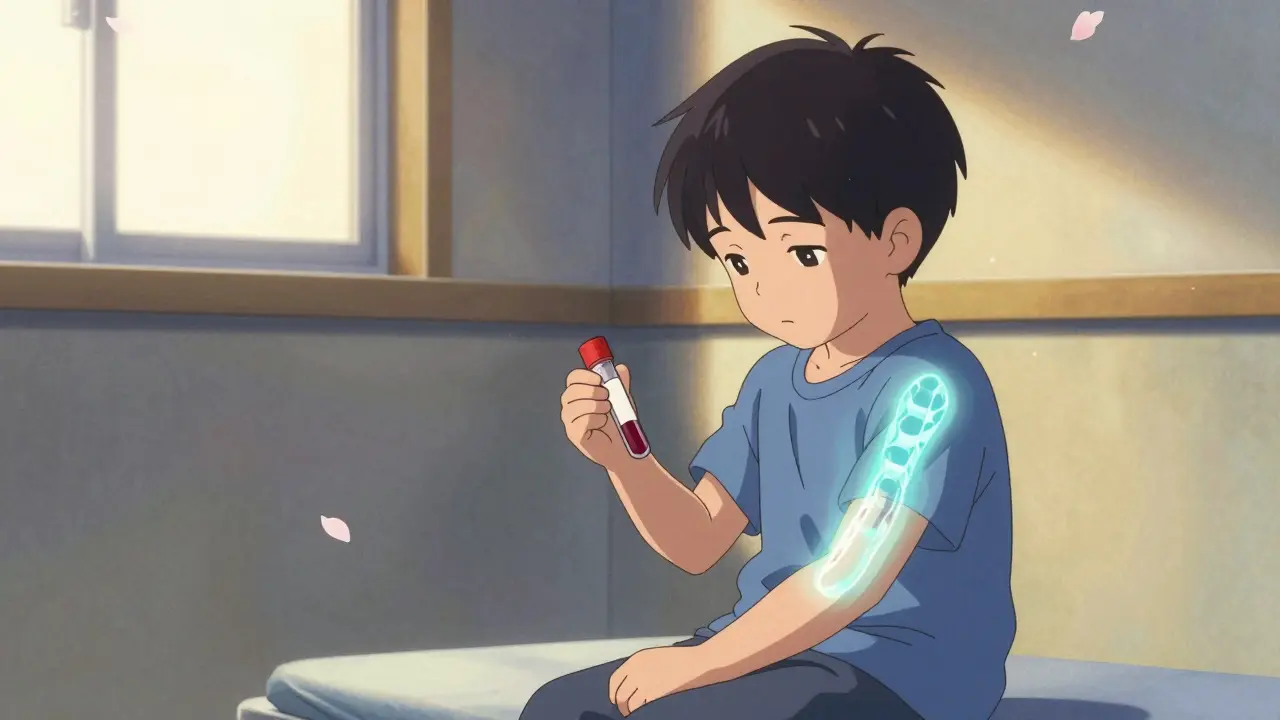
Imagine being born with a ticking time bomb in your arteries. Not because of poor diet or lack of exercise, but because of a gene you inherited from a parent. This is the reality for people with familial hypercholesterolemia (FH). It’s not rare. It affects about 1 in every 200 to 250 people worldwide. Yet, more than 90% of those people don’t even know they have it. And without knowing, they’re at eight to ten times higher risk of having a heart attack before age 50 - sometimes even before 30.
What Is Familial Hypercholesterolemia?
Familial hypercholesterolemia is a genetic condition that causes dangerously high levels of LDL cholesterol - the "bad" kind - from birth. It’s not caused by eating too much cheese or skipping the gym. It’s caused by a broken gene, usually inherited from one parent (heterozygous FH) or sometimes both (homozygous FH). This gene defect stops the liver from removing LDL cholesterol properly, so it builds up in the blood and sticks to artery walls, causing plaques that can block blood flow.
People with heterozygous FH typically have LDL levels above 190 mg/dL as adults, or over 160 mg/dL as kids. Those with homozygous FH? Their LDL can hit 400 mg/dL or higher. That’s like having a constant flood of cholesterol pouring into your arteries. Left untreated, men with FH lose an average of 30 years of life. Women lose about 25. But here’s the critical part: if you catch it early and treat it hard, life expectancy can return to normal.
Why Most People Never Get Diagnosed
Here’s the scary truth: in the U.S., only 6 to 10% of people with FH are diagnosed. That means over 1.3 million Americans with FH are walking around unaware. Why? Because FH often has no symptoms until it’s too late.
Unlike high blood pressure or diabetes, you can’t feel high cholesterol. And while homozygous FH can show visible signs like yellowish lumps on tendons (xanthomas) or a white ring around the cornea (corneal arcus), heterozygous FH - the more common form - looks completely normal on the outside. The first sign? A heart attack.
Doctors don’t always think to test for it. Pediatricians rarely check cholesterol in kids, even though the American Academy of Pediatrics says every child should be screened between ages 9 and 11. Only 12% of U.S. pediatricians do it regularly. And even when a young adult ends up in the ER after a heart attack, doctors rarely ask about family history - or test for FH.
There’s also a gap in access. Genetic testing, the gold standard for diagnosis, is expensive and not widely available. Many insurance plans won’t cover it unless you already have a strong suspicion. So most people get diagnosed by accident - after a heart event.

How to Spot It: Screening Methods That Work
There are two proven ways to find FH before it kills someone: universal screening and cascade screening.
Universal screening means testing all kids between ages 9 and 11 for cholesterol levels. No exceptions. If a child’s LDL is over 160 mg/dL, they need further evaluation. This method catches kids with FH regardless of family history. It’s simple, cost-effective, and endorsed by the American Heart Association. But in practice? It’s rarely done.
Cascade screening is the smarter way to find more cases fast. Once one person is diagnosed with FH, you test their first-degree relatives - parents, siblings, kids. Since FH is autosomal dominant, each of those relatives has a 50% chance of having it too. Then you test the relatives of those relatives. One diagnosis can lead to five, ten, even twenty more.
In the Netherlands, where cascade screening has been mandatory for decades, over 18,000 cases have been found. In the U.S.? Only 30-40% of eligible families even get screened. And even then, only 2.9% of diagnosed adults actually get their relatives tested, according to a 2022 Circulation study.
Tools like the Dutch Lipid Clinic Network (DLCN) criteria help doctors decide who to test based on cholesterol levels, family history, and physical signs. But new tech is changing the game. Machine learning models now analyze electronic health records - age, sex, LDL levels, family history - and flag potential FH cases with 92% accuracy. One 2023 study showed these AI tools cut the number of people you need to screen by nearly half.
Aggressive Treatment: It’s Not Optional
Once FH is diagnosed, treatment can’t wait. The goal isn’t just to lower cholesterol - it’s to prevent heart attacks before they happen. And that means starting early and going hard.
For children with FH, statins are recommended as early as age 2 if one parent has it, or at birth if both do. Statins reduce LDL by 30-50% and have been proven safe in kids over decades of use. But most people don’t stop there. For adults and high-risk kids, combining statins with ezetimibe (a pill that blocks cholesterol absorption) or PCSK9 inhibitors (injections that help the liver clear LDL) is standard.
PCSK9 inhibitors like evolocumab and inclisiran are game-changers. Inclisiran, approved in 2021, only needs two shots a year. That’s huge for adherence - many people forget daily pills, but two shots? Much easier to stick with.
The target? Get LDL below 100 mg/dL for adults, and below 135 mg/dL for children. And it’s not enough to just hit the number - you need to cut LDL by at least 50% from its original level. That’s aggressive. But necessary. Studies show people who stick to this plan can live as long as anyone else.

Why This Isn’t Happening Everywhere
So why aren’t we doing this everywhere? Three big reasons.
First, awareness. Many doctors still think high cholesterol is a lifestyle issue. They don’t recognize FH as a genetic emergency. Second, access. There’s one lipid specialist for every 1.5 million people in the U.S. Most patients never see one. Third, cost. Genetic tests cost hundreds to thousands of dollars. Insurance often denies them. And even when they’re approved, labs take weeks to return results.
Meanwhile, countries like the Netherlands, the UK, and Norway have national FH registries. They track every case, mandate cascade screening, and fund genetic testing. Their diagnosis rate? 20-30%. In the U.S.? Still stuck at 6-10%.
And the cost of doing nothing? The CDC estimates that without action, 250,000 Americans will die prematurely from FH-related heart disease in the next decade. But if we implemented full cascade screening and early treatment, we could prevent 180,000 of those deaths.
What You Can Do Right Now
If you’ve had a heart attack before 50 - or if a close relative did - get tested. Don’t wait. Ask for an LDL test. If your level is over 190 (or 160 if you’re a kid), push for further evaluation. Request genetic testing if possible.
If you’re a parent: get your child’s cholesterol checked between ages 9 and 11. Even if they’re thin, active, and eat healthy. FH doesn’t care.
If you’re a doctor: screen your pediatric patients. Test family members of diagnosed patients. Use the DLCN criteria. Don’t wait for symptoms. Don’t assume it’s just "bad cholesterol."
FH isn’t a lifestyle disease. It’s a genetic emergency. And the tools to fix it already exist. We know how to find it. We know how to treat it. We just need to start doing it - consistently, aggressively, and without delay.







Alexandra Enns
25 Jan, 2026
Let me tell you something nobody in the U.S. wants to admit - Canada’s been doing this right for years. We screen kids at 9, we track families, we don’t wait for someone to drop dead before we act. Meanwhile, your system is still pretending high cholesterol is just a ‘bad diet’ problem. Wake up. This isn’t about willpower - it’s genetics. And you’re letting people die because you’re too lazy to fund testing.
Stop glorifying ‘personal responsibility’ when the disease is inherited. I’ve seen it. My cousin was 27 when he had his first heart attack. His LDL was 320. No junk food. No obesity. Just bad genes. And your doctors didn’t even test him until it was too late.
Stop pretending this is a healthcare issue. It’s a moral failure.
Marie-Pier D.
25 Jan, 2026
Thank you for writing this. 💔 I’ve been screaming into the void for years about FH - my brother was diagnosed after his 31st birthday, right after his first angioplasty. He’s 34 now, on two statins, ezetimibe, and a PCSK9 shot every two weeks. He’s alive because someone finally listened.
To all the parents out there: get your kids tested. Even if they’re skinny. Even if they eat kale. Even if they run marathons. FH doesn’t care how ‘healthy’ they look. It’s silent. And it’s brutal.
I’m so grateful this post exists. We need more of this. 🙏
Dolores Rider
27 Jan, 2026
Ok but what if this is all a pharma scam? 🤔
Think about it - statins, PCSK9 inhibitors, genetic tests… all super expensive. Who profits? Big Pharma. Who gets scared? Regular people. Who controls the guidelines? Doctors who get paid by drug reps.
I read a blog once that said FH was invented to sell pills. What if your ‘genetic emergency’ is just a marketing campaign? What if your ‘1 in 250’ stat is fabricated? I’m not saying it’s fake - I’m saying I’m not buying it until someone proves it’s not a money grab.
And why do they only test kids at 9? Why not at birth? Hmmm… maybe because newborn screening costs more. 🤷♀️
Jenna Allison
29 Jan, 2026
Just to clarify something important - the 1 in 250 prevalence is for heterozygous FH, which is the common form. Homozygous FH is rarer - about 1 in 300,000. But the real problem isn’t the rarity - it’s the underdiagnosis.
LDL >190 in adults or >160 in kids? That’s a red flag. But most primary care docs don’t know that. They see ‘high cholesterol’ and say ‘eat less butter.’ They don’t order genetic panels or ask about family history.
And yes - statins are safe in kids. Decades of data. No growth issues. No cognitive harm. The real danger is waiting. The damage starts in childhood. That’s why guidelines say start at age 2 if both parents have FH.
It’s not hype. It’s biology.
Sharon Biggins
30 Jan, 2026
Thank you for sharing this. I just found out my 10-year-old has FH last month. We were lucky - his pediatrician actually listened when I said his dad had a heart attack at 38. We got the genetic test, started him on a low-dose statin, and he’s doing great.
I know it’s scary. But please don’t wait. If you have a family history - even just one person with early heart disease - ask for a lipid panel. Don’t wait for symptoms. Don’t wait for a doctor to bring it up.
You’re not overreacting. You’re being a hero.
❤️
John McGuirk
30 Jan, 2026
So let me get this straight - you want us to test every kid in America for cholesterol… and then pump them full of statins before they even hit puberty? And you think that’s okay?
Who decided this? WHO? CDC? Big Pharma? The same people who told us trans fats were fine? The same people who said smoking was harmless?
My cousin’s kid got diagnosed with FH last year. Got statins. Now he’s on meds at age 7. What’s next? Gene editing? Mandatory injections? Who’s next on the list? People with ‘high triglycerides’? ‘Borderline hypertension’?
This isn’t medicine. It’s social engineering.
Michael Camilleri
31 Jan, 2026
People keep talking about genes like they’re some kind of divine sentence. But here’s the truth - your body is not a machine. It’s a living system. Cholesterol isn’t evil. It’s essential. Your cells need it. Your brain needs it. Your hormones need it.
So why are we treating it like poison? Why are we trying to erase it from the blood with drugs? Because we’ve been brainwashed by a system that profits from fear.
Maybe the real problem isn’t your LDL level - it’s your fear of death. Maybe if you stopped trying to control nature with pills, you’d live longer anyway.
Stop treating biology like a math problem. It’s not a number to crush. It’s a dance to understand.
Darren Links
1 Feb, 2026
Canada and the UK are doing this? Cute. But let’s be real - they’re just importing American medical dogma and slapping a maple leaf on it.
Meanwhile, in the U.S., we’ve got people living to 90 with LDLs of 220. And they eat bacon, drive muscle cars, and never took a statin. So maybe this whole ‘genetic emergency’ thing is just another fear campaign to sell drugs.
My grandpa had an LDL of 280 and lived to 96. He never saw a doctor. He smoked two packs a day. He died playing poker. So… what’s the real problem here?
It’s not the cholesterol. It’s the industry that wants you scared.
Husain Atther
2 Feb, 2026
This is a very thoughtful and well-researched piece. Thank you for sharing. In India, awareness is extremely low. Most doctors still think cholesterol is only about diet. I have seen many young patients with heart attacks, and when we ask about family history, the answer is always ‘no one had anything like this.’
But when we dig deeper - often through family interviews - we find that uncles, grandfathers, or even cousins had early heart disease. It’s hidden. Silent.
I’ve started encouraging my colleagues to ask about family history in every young patient with high LDL. Even if they’re vegetarian. Even if they’re thin. The genetics don’t lie.
Small steps. But they matter.
Helen Leite
2 Feb, 2026
OMG I just found out my 12-year-old has FH 😱 I thought he was just ‘a bit chubby’ but his LDL was 210. We’re getting the genetic test next week. I’m so scared. But also… relieved? Like… now I know. Now I can fight.
Why didn’t anyone tell me this was a thing?!? I thought cholesterol was just ‘eat less pizza’ 😭
Anyone else? Please tell me I’m not alone. 🥺
asa MNG
4 Feb, 2026
So you’re telling me my 8-year-old needs a shot every two weeks to stay alive? And you call that medicine? I’ve got news for you - the FDA approved that stuff in 2015 and it’s already been linked to depression, memory loss, and liver damage.
My kid’s not a lab rat. I’m not letting them inject him with some biotech magic potion just because some doctor got a free lunch from a rep.
My dad had an LDL of 250 and lived to 91. He never took a pill. He ate butter. He smoked. He drank whiskey.
Maybe your kid will be fine. Maybe he’s just fine.
Stop scaring parents. Stop selling drugs. Let nature take its course.
Sushrita Chakraborty
4 Feb, 2026
This is an exceptionally well-structured and evidence-based exposition on familial hypercholesterolemia. The emphasis on cascade screening is particularly compelling; it is not merely a clinical protocol but a public health imperative. In India, the lack of lipid registries and the absence of pediatric lipid screening programs remain critical gaps. While genetic testing is cost-prohibitive for most, the implementation of simplified screening criteria - such as the DLCN - could dramatically increase case detection without requiring advanced infrastructure.
Furthermore, the assertion that early statin therapy is safe in children is supported by longitudinal data from the Netherlands and the U.S. Pediatric Lipid Clinic Network. The fear of long-term side effects is not evidence-based; the fear of premature death is.
Let us not mistake accessibility for adequacy. We must act - not because it is convenient, but because it is just.
lorraine england
5 Feb, 2026
My husband’s dad had a heart attack at 35. We never thought to get tested until our daughter was 10 and got her cholesterol checked for school. LDL: 205.
We were devastated. Then we were angry. Then we were determined.
She’s on a low-dose statin now. We changed our diet. We started walking after dinner. We told every relative. We’re not letting this silence kill anyone else.
If you’re reading this and you’ve had early heart disease in your family - please, please, please get tested. You’re not being dramatic. You’re being smart.
You’ve got this. 💪
Himanshu Singh
6 Feb, 2026
There’s a quiet revolution happening in preventive medicine - and it’s not about drugs or tests. It’s about family. FH teaches us that health isn’t individual. It’s inherited. It’s shared. It’s passed down like a family recipe - except this one can kill.
When we diagnose one person, we’re not just helping them. We’re protecting their siblings, their children, their cousins. We’re breaking a chain. That’s powerful.
It’s not about fear. It’s about love. The kind of love that says: ‘I won’t let you die because no one asked the right question.’
Thank you for asking it.