

What Hormone Replacement Therapy Really Does
Hormone Replacement Therapy, or HRT, isn’t about slowing aging or chasing youth. It’s about helping women get through the messy, exhausting, sometimes unbearable transition of menopause. When ovaries start winding down, estrogen and progesterone levels drop-and that’s when hot flashes, night sweats, sleep loss, and vaginal dryness show up. For many, these aren’t just annoyances. They’re life-disrupting. HRT steps in to replace what the body no longer makes in enough quantity. It’s not a magic pill, but for the right person, it’s one of the most effective tools we have.
The Real Benefits: More Than Just Hot Flash Relief
Yes, HRT works wonders for hot flashes and night sweats. Studies show it reduces them by 80-90%, far outperforming antidepressants like SSRIs, which only cut symptoms by about half. But the benefits go deeper. Women who start HRT before age 60 or within 10 years of their last period see a 32% lower risk of heart disease. That’s not a small thing-heart disease is the leading cause of death in women over 50. HRT also cuts the risk of osteoporosis-related fractures by 34%. That’s more than what most bone drugs achieve in the first few years. For women with early menopause or surgical removal of ovaries, HRT isn’t optional-it’s protective.
The Risks: What the Numbers Actually Show
The big scare came in 2002 with the Women’s Health Initiative study. It said HRT increased breast cancer risk. That sent prescriptions plunging. But the story’s more nuanced now. The increased risk? About 8 extra cases per 10,000 women per year using estrogen plus progestogen. That’s low. Compare that to smoking, obesity, or alcohol-those carry much higher risks. The type of HRT matters too. Oral estrogen raises blood clot risk more than patches or gels. Transdermal HRT (patches, gels) carries 1.5 to 2 times less risk of dangerous clots than pills. And if you’ve had breast cancer, blood clots, or a history of stroke? HRT is off the table. But for healthy women under 60? The risks are manageable.
Oral vs. Patches vs. Gels: Delivery Makes a Difference
Not all HRT is the same. Pills go through the liver first, which can trigger inflammation and raise clotting proteins. Patches and gels deliver estrogen straight into the bloodstream, bypassing the liver. That’s why transdermal HRT is safer for women with high blood pressure, obesity, or a family history of clots. Vaginal creams or rings are perfect for dryness and urinary symptoms without affecting the rest of the body. Progesterone? Micronized progesterone (brand name Prometrium) is preferred over synthetic progestins like medroxyprogesterone. It’s less likely to cause mood swings or breast tenderness. The goal? Use the lowest dose that works, for the shortest time needed.

Who Should Avoid HRT? Contraindications You Can’t Ignore
HRT isn’t for everyone. Absolute no-gos include: current or past breast cancer, active blood clots (like deep vein thrombosis or pulmonary embolism), untreated high blood pressure, liver disease, or unexplained vaginal bleeding. If you’ve had a stroke or heart attack in the past year, wait. And if you’re over 60 and haven’t started HRT yet? The benefits for heart and bone health drop off. That doesn’t mean you can’t use it for symptoms-but the risk-benefit balance shifts. Don’t start HRT just because your friend did. Talk to your doctor about your personal history, not just your symptoms.
Monitoring: What Happens After You Start
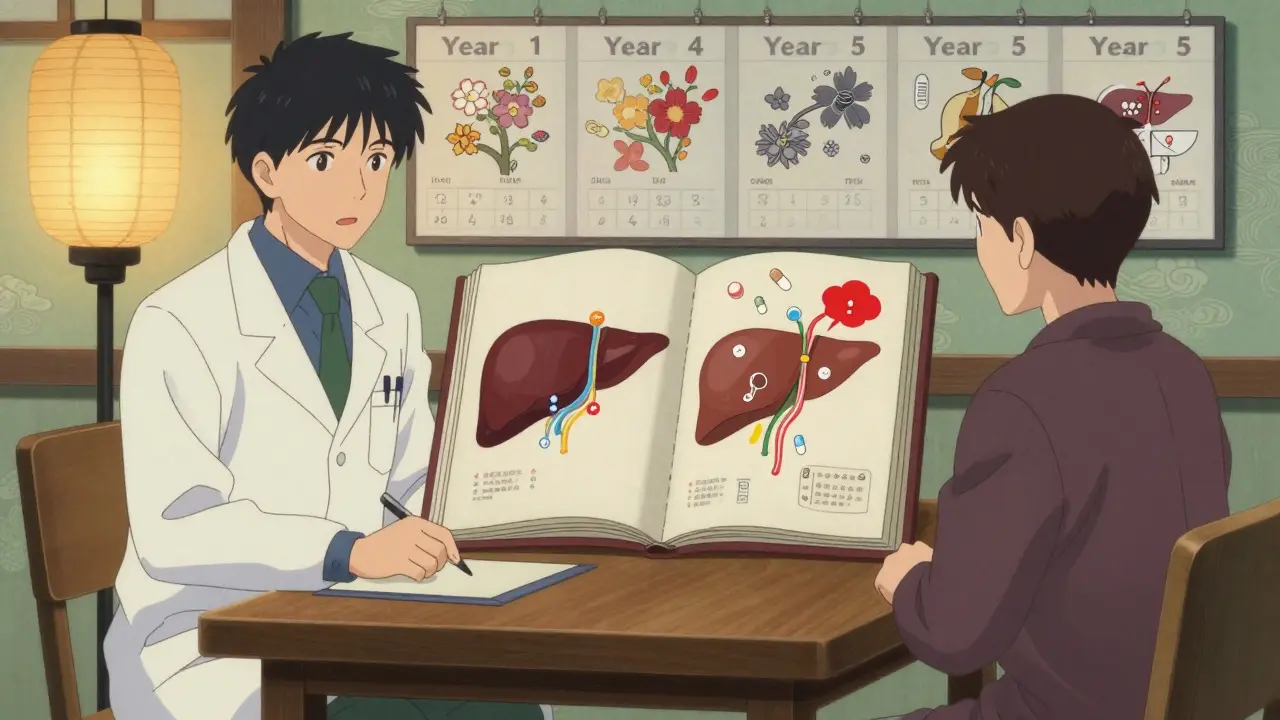
You don’t just get a prescription and forget about it. Monitoring is key. Before starting, you need a baseline mammogram, blood pressure check, and pelvic exam. After three months, you’ll check in: Are the hot flashes gone? Any new breast tenderness? Vaginal bleeding? That’s normal in the first six months for most women on combined HRT-but if it lasts longer than six months, you need an ultrasound or biopsy to rule out endometrial issues. Every year, you’ll get your blood pressure checked, weight tracked, and breasts examined. Mammograms continue on schedule-usually every two years. No one’s keeping you on HRT forever. Re-evaluate every year: Do you still need it? Are your symptoms under control? Is your risk profile unchanged?
Bioidentical Hormones: Hype or Help?
You’ve heard the buzz: “Natural bioidentical hormones are safer.” But here’s the truth-there’s no solid evidence that compounded bioidentical hormones (made in specialty pharmacies) are safer or more effective than FDA-approved versions. The Endocrine Society says so. The FDA says so. The problem? Compounded products aren’t tested for purity, consistency, or dosing accuracy. One batch might have too much estrogen. Another might have none. That’s risky. FDA-approved estradiol and micronized progesterone are standardized, tested, and regulated. If you want “natural,” choose those. Skip the unregulated stuff.
Why So Many Women Quit HRT
Even when it works, nearly one in three women stop HRT within a year. Why? Fear. Forty-eight percent say they’re scared of breast cancer. Twenty-two percent say irregular bleeding scared them off. Some get nausea or headaches from pills. Others just don’t like the idea of taking hormones long-term. But here’s what most don’t know: transdermal users report fewer side effects. Sixty-eight percent stick with patches or gels after a year, compared to just 52% on pills. If you’re struggling with side effects, don’t quit. Talk to your doctor. Switch to a patch. Lower the dose. Try a different progesterone. There’s almost always a better fit.
The New Guidelines: What Changed in 2022
In September 2022, the FDA updated HRT labels after reviewing 20 years of data. The old black box warnings? Gone. They were too broad. They scared women who could have benefited. The new labeling says clearly: for women under 60 or within 10 years of menopause, the benefits outweigh the risks for symptom relief and bone protection. That’s huge. It means doctors can now talk more honestly with patients. It means women can make informed choices instead of avoiding treatment out of fear. The North American Menopause Society and the Endocrine Society have been saying this for years. The FDA just caught up.
What’s Next for HRT
Research is moving fast. Scientists are looking at how your genes affect how you metabolize estrogen-some people break it down faster than others. That could lead to personalized dosing. New formulations are coming too, like transdermal progesterone (no pills, no liver stress) and tissue-selective estrogen complexes (TSECs) that protect the uterus without needing monthly progestogen. These aren’t available everywhere yet, but they’re on the horizon. For now, stick with proven options: low-dose transdermal estrogen, micronized progesterone, and regular check-ins. That’s the gold standard.
Final Thought: It’s Not All or Nothing
HRT isn’t a yes-or-no decision. It’s a personal one. For some, it’s life-changing. For others, non-hormonal options like gabapentin, cognitive behavioral therapy, or lifestyle changes work fine. But if you’re suffering from hot flashes, sleepless nights, or vaginal pain, don’t assume you have to just live with it. Talk to a doctor who knows the latest guidelines. Get the right test. Try the right form. Give it a fair shot. The goal isn’t to take hormones forever. It’s to get through menopause with your health, comfort, and quality of life intact.
Is hormone replacement therapy safe for women over 60?
For women over 60 who haven’t used HRT before, starting it is generally not recommended for heart or bone protection-those benefits don’t apply at that age. But if you’re still having severe hot flashes or vaginal symptoms, low-dose transdermal HRT may still be an option. The risks of blood clots and stroke rise with age, so doctors weigh symptom severity against those risks. It’s not a blanket no, but it requires careful evaluation.
Does HRT cause weight gain?
HRT itself doesn’t cause weight gain. Menopause does. As estrogen drops, fat tends to shift to the abdomen, and metabolism slows. Some women think HRT made them gain weight because they started it around the same time-but studies show women on HRT often lose or maintain weight better than those not on it. Fluid retention from pills can cause temporary bloating, but this usually clears up. Patches and gels rarely cause this.
How long should I stay on HRT?
There’s no fixed time limit. Most women use HRT for 3-5 years to get through the worst symptoms. But if you’re still having severe hot flashes at age 58 or 60, continuing is reasonable. The key is annual reviews: Are symptoms still bothering you? Is your health stable? Are you still at low risk for breast cancer or clots? If yes, you can continue. If not, you can taper off. Many women stop after 5-7 years. Others stay on longer because the benefits still outweigh the risks.
Can HRT help with mood swings and depression during menopause?
Yes, for many women. Low estrogen is linked to mood changes, irritability, and even depression during menopause. HRT can help stabilize these by restoring hormone balance. It’s not a substitute for antidepressants in clinical depression, but for mood symptoms tied to hormonal shifts, it often works better than SSRIs. Studies show improved sleep and reduced anxiety alongside hot flash relief-both of which improve mood indirectly.
What if I don’t want hormones at all? Are there good alternatives?
Absolutely. For mild symptoms, lifestyle changes help: cooling bedrooms, avoiding spicy food and alcohol, regular exercise, and stress management. For moderate symptoms, non-hormonal options include gabapentin (for night sweats), clonidine (for hot flashes), or SSRIs like escitalopram. Cognitive behavioral therapy (CBT) has been shown to reduce hot flash severity by 50% in some trials. But none work as well as HRT for severe symptoms. If you’re choosing non-hormonal because you’re afraid of HRT, talk to your doctor about transdermal options-they’re much safer than pills.



Carolyn Whitehead
31 Jan, 2026
I started patches last year and my night sweats are gone. No more waking up soaked. Best decision ever.
Lily Steele
2 Feb, 2026
I was scared to try HRT after the 2002 hype, but my doctor showed me the real numbers. Switched to a gel and I feel like myself again. Seriously, don't let fear decide for you.
Rohit Kumar
2 Feb, 2026
In India, menopause is still treated as a private shame. Women suffer silently because they're told it's just part of aging. This kind of clear, evidence-based information needs to be shared more widely.
Amy Insalaco
3 Feb, 2026
The FDA's revision is less a breakthrough and more a long-overdue correction of a politically motivated panic. The WHI study was methodologically flawed in its cohort selection and dosing protocol, and the subsequent media frenzy weaponized statistical noise to pathologize a natural physiological transition. The real scandal is how medical paternalism persisted for two decades.
Blair Kelly
3 Feb, 2026
I read this whole thing and still think you're selling snake oil. HRT is just Big Pharma's way of turning menopause into a disease so they can sell pills. I'd rather just drink cold water and wear cotton.
kate jones
3 Feb, 2026
Transdermal estrogen bypasses first-pass hepatic metabolism, reducing hepatic synthesis of clotting factors like fibrinogen and factor VII. This is why patch users have significantly lower VTE risk compared to oral formulations. Also, micronized progesterone has a GABAergic effect-less mood disruption than medroxyprogesterone acetate. These aren't opinions. These are pharmacokinetic facts.
Kelly Weinhold
5 Feb, 2026
I was on pills for 6 months and got awful bloating and mood swings. Switched to a patch and suddenly I could sleep, think clearly, and even enjoy coffee again. It's not about being weak-it's about finding what works for your body. Don't give up if the first try sucks.
Jodi Olson
5 Feb, 2026
The notion that bioidentical hormones are inherently safer is a dangerous myth perpetuated by wellness influencers who misunderstand endocrinology. The term bioidentical refers only to molecular structure not safety profile. FDA-approved estradiol and progesterone are identical to endogenous hormones and rigorously tested. Compounded versions are not. This is basic pharmacology.
Beth Beltway
7 Feb, 2026
You're downplaying the cancer risk. Eight extra cases per 10,000 sounds small until it's your friend. And what about the women who develop estrogen-sensitive tumors and only realize it after years of use? This is medical normalization of risk.
Natasha Plebani
9 Feb, 2026
I think we're missing the bigger picture. Menopause isn't just a hormonal shift-it's a cultural one. We've built a society that values youth and productivity over wisdom and transition. HRT helps with symptoms, but what we really need is a cultural reckoning with aging. Why is a woman over 50 invisible? Why are we so afraid of change?
Marc Bains
9 Feb, 2026
My mom started HRT at 54 after her hysterectomy. She was terrified. Now she hikes every weekend. She says the difference is like being underwater vs. breathing air. If you're suffering, don't let fear silence your voice. Talk to a menopause specialist, not just your GP.
Gaurav Meena
10 Feb, 2026
I have two sisters in the US and one in India. One uses patches, the other avoids hormones entirely, and the third tried everything including Ayurveda. All three are healthy. There is no one-size-fits-all. The key is informed choice, not fear or dogma.
Katie and Nathan Milburn
11 Feb, 2026
The FDA update reflects a growing consensus among endocrinologists. Long-term data from the Kronos Early Estrogen Prevention Study and the ELITE trial support early initiation for symptom relief and cardiovascular protection in healthy women under 60. The risks are real but quantifiable and manageable. This is medicine evolving.